



What's Happening?
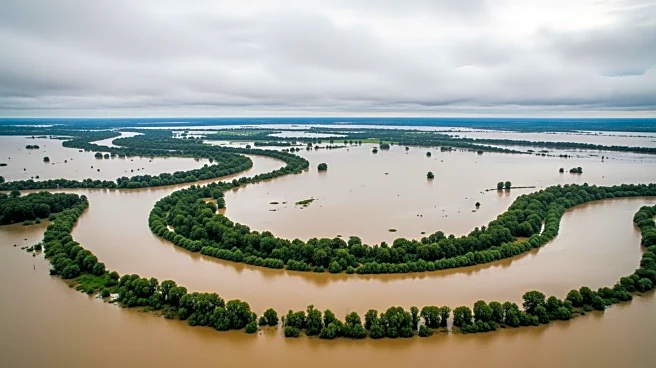
NASA's Earth Observatory has reported significant flooding in southern Mozambique, which has severely impacted the region. The flooding, caused by weeks of intense rainfall, has affected at least 600,000 people and displaced hundreds of thousands. The floodwaters
have overwhelmed key reservoirs and spilled into heavily populated areas along the Limpopo and Incomati rivers. The Moderate Resolution Imaging Spectroradiometer (MODIS) on NASA’s Aqua satellite captured images of the floodwaters, highlighting the scale of the disaster. The flooding has destroyed or damaged at least 30,000 homes and inundated 180,000 hectares of crops, leading to the loss of over 150,000 livestock. Health experts have raised concerns about the increased risk of waterborne diseases such as cholera and diarrhea, and there have been reports of crocodile attacks in some areas.
Why It's Important?
The flooding in Mozambique underscores the vulnerability of regions to extreme weather events, which are becoming more frequent and severe due to climate change. The destruction of agricultural land and livestock poses a significant threat to food security in the region, potentially leading to famine if not addressed promptly. The displacement of hundreds of thousands of people creates a humanitarian crisis, requiring urgent international aid and support. The health risks associated with waterborne diseases could further strain the already limited healthcare resources in Mozambique. This event highlights the need for improved infrastructure and disaster preparedness to mitigate the impacts of such natural disasters.
What's Next?
In response to the flooding, international aid organizations and the Mozambican government are likely to increase their efforts in providing emergency relief and support to the affected populations. This may include the distribution of food, clean water, and medical supplies, as well as the establishment of temporary shelters for displaced individuals. Long-term recovery efforts will focus on rebuilding infrastructure, restoring agricultural productivity, and enhancing flood management systems to prevent future disasters. The international community may also play a role in supporting Mozambique through financial aid and technical assistance.
Beyond the Headlines
The flooding in Mozambique serves as a stark reminder of the broader implications of climate change, particularly for developing countries that lack the resources to effectively respond to such crises. It raises ethical questions about the responsibility of wealthier nations to assist those most affected by climate-related disasters. Additionally, the event may prompt discussions on the need for global cooperation in addressing climate change and investing in sustainable development practices to build resilience against future environmental challenges.