




What's Happening?
The House Ethics Committee has launched an investigation into a two-term incumbent, Rep. Cory Mills, R-Fla., following allegations of physical assault against his former girlfriend and violations of campaign finance laws. Mills has denied these claims,
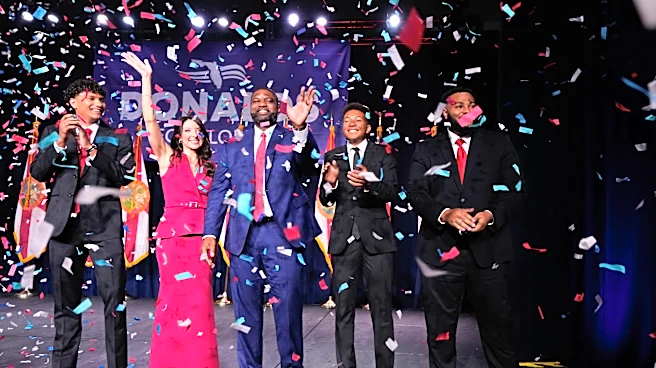
stating, “Show me where I’ve ever been charged or found guilty of anything.” He further accused Rep. Nancy Mace, R-S.C., of introducing a censure resolution against him as a diversion from her own alleged misconduct, citing a restraining order filed against Mace by her ex-fiancé for harassment. Mills recently lost his primary election to Ryan Elijah by 12 percentage points, despite being backed by President Trump. Polling data from National Victory Strategies had indicated Elijah leading by 13 percentage points prior to the election. This primary loss occurred amidst a series of scandals that had concerned fellow Florida Republicans about the potential vulnerability of the House seat in the upcoming November general election.
Why It's Important?
This investigation and primary election outcome are significant for several reasons. Firstly, the House Ethics Committee's involvement underscores the ongoing scrutiny of ethical conduct among elected officials, particularly concerning allegations of personal misconduct and campaign finance irregularities. Such probes can erode public trust in political institutions and influence voter perception. Secondly, the defeat of a President Trump-backed incumbent, especially one facing ethics allegations, highlights the potential impact of scandal on electoral success, even with high-profile endorsements. This could signal a shift in voter priorities or a reduced tolerance for controversial candidates within the Republican base. Lastly, the concern among Florida Republicans that Mills's scandals could jeopardize the House seat in the general election reflects the strategic importance of candidate integrity in maintaining party control, particularly in closely contested districts. The primary result suggests that the party may now have a stronger candidate to defend the seat against the Democratic challenger.
What's Next?
Following his primary loss, Rep. Cory Mills will not be on the ballot for the November general election. Ryan Elijah, who secured President Trump's endorsement for the general election after his primary victory, will now face Democrat Bale Dalton. The district, which President Trump previously won by 13%, is expected to be a key battleground. The outcome of this general election will determine whether Florida sends a new Republican representative to the 120th Congress, potentially helping to maintain the slim Republican majority in Washington. The House Ethics Committee's investigation into Mills's alleged conduct is likely to continue, regardless of his electoral defeat, as such inquiries often proceed to uphold standards of conduct for current and former members of Congress. The resolution of these allegations could set precedents for how similar cases are handled in the future.
Beyond the Headlines
The situation surrounding Rep. Mills extends beyond immediate electoral consequences, touching upon deeper issues within the political landscape. The allegations of physical assault and campaign finance violations, coupled with Mills's counter-accusations against a colleague, highlight a broader trend of increasing personal attacks and ethical challenges in U.S. politics. This environment can contribute to political polarization and a decline in civil discourse. Furthermore, the initial endorsement of Mills by President Trump, followed by a retraction and an endorsement of his primary opponent after the loss, raises questions about the influence of party leadership versus voter sentiment in candidate selection. It also underscores the evolving dynamics of political endorsements and their effectiveness when candidates face significant ethical scrutiny. The public's reaction to such events can shape expectations for accountability and transparency from elected officials, potentially influencing future campaign strategies and the types of candidates who gain traction.