






What's Happening?
A Harvard Business School professor has highlighted the subtle but significant career risks that remote work poses for Generation Z. While remote work offers flexibility and autonomy, it can hinder young professionals' career development by limiting opportunities
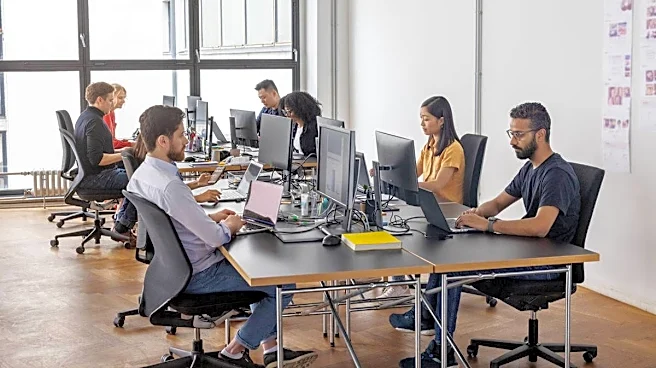
for mentorship, feedback, and skill-building. Research indicates that remote work may contribute to youth unemployment and make it harder for younger workers to advance. Experts suggest that early-career professionals should spend at least a few days a week in the office to improve communication skills and build strong professional relationships.
Why It's Important?
The shift to remote work has transformed the workplace, but it also presents challenges for young professionals entering the job market. The lack of in-person interaction can impede career growth and development, potentially widening the skills gap for Gen Z. As companies continue to adopt remote and hybrid work models, understanding these risks is crucial for both employers and employees. Addressing these challenges could lead to more effective workforce strategies that balance flexibility with career development opportunities.
What's Next?
Organizations may need to reevaluate their remote work policies to ensure they support early-career development. This could involve creating hybrid work models that encourage in-person collaboration and mentorship. Employers might also invest in training programs to help young professionals develop essential skills remotely. As the workforce evolves, companies that successfully address these challenges could gain a competitive advantage in attracting and retaining top talent. Additionally, policymakers may consider initiatives to support young workers in navigating the remote work landscape.