



What's Happening?
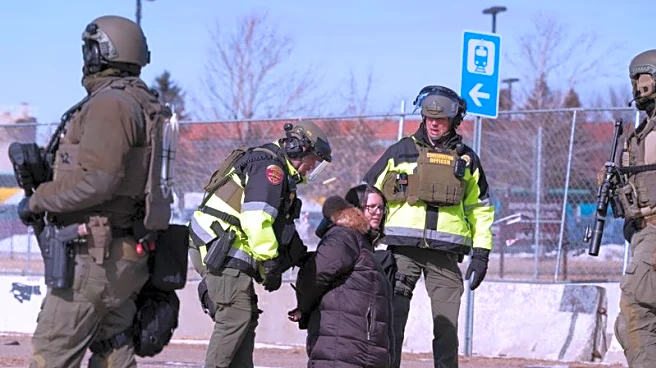
Minnesota has initiated a legal battle against the Trump administration, seeking accountability for Immigration and Customs Enforcement (ICE) agents involved in shootings. The state is challenging the federal government's refusal to cooperate in investigations
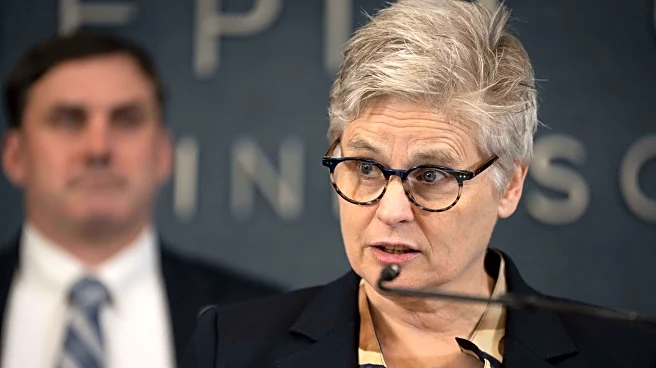
of incidents where ICE agents shot and killed Renee Good and Alex Pretti, and wounded Julio Cesar Sosa-Celis. Minnesota prosecutors, led by Hennepin County Attorney Mary Moriarty, have filed a federal lawsuit against the Departments of Homeland Security and Justice, demanding evidence and transparency. The Trump administration has not released the names of the agents involved, citing federal immunity. This legal action is unprecedented and highlights a constitutional conflict over states' rights versus federal immunity.
Why It's Important?
The lawsuit underscores a significant tension between state and federal authorities regarding accountability for federal agents' actions. The outcome could set a precedent for how states can hold federal agents accountable, impacting future cases involving federal law enforcement. The case also raises questions about transparency and cooperation between state and federal agencies, which could influence public trust in law enforcement. If Minnesota succeeds, it may encourage other states to pursue similar actions, potentially leading to changes in how federal immunity is applied. The case also highlights the broader issue of federal oversight and accountability in law enforcement operations.
What's Next?
The legal proceedings are expected to be lengthy, with potential appeals reaching the U.S. Supreme Court. Minnesota prosecutors face challenges, including proving that the agents do not qualify for immunity under the Constitution's supremacy clause. The case could influence future legal interpretations of federal immunity and states' rights. Additionally, the outcome may affect the Trump administration's approach to cooperation with state investigations. The lawsuit's progress will be closely watched by legal experts and state prosecutors nationwide, as it could reshape the legal landscape for holding federal agents accountable.