






What's Happening?
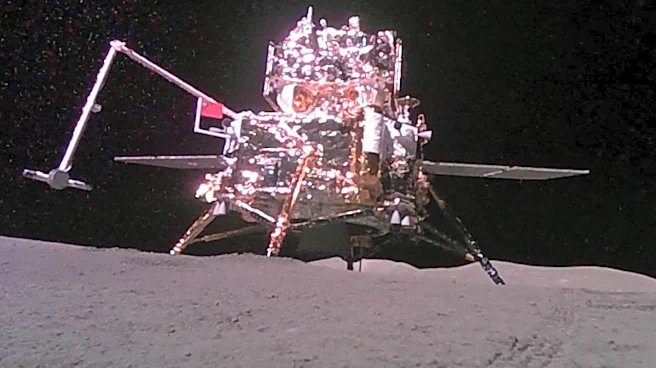
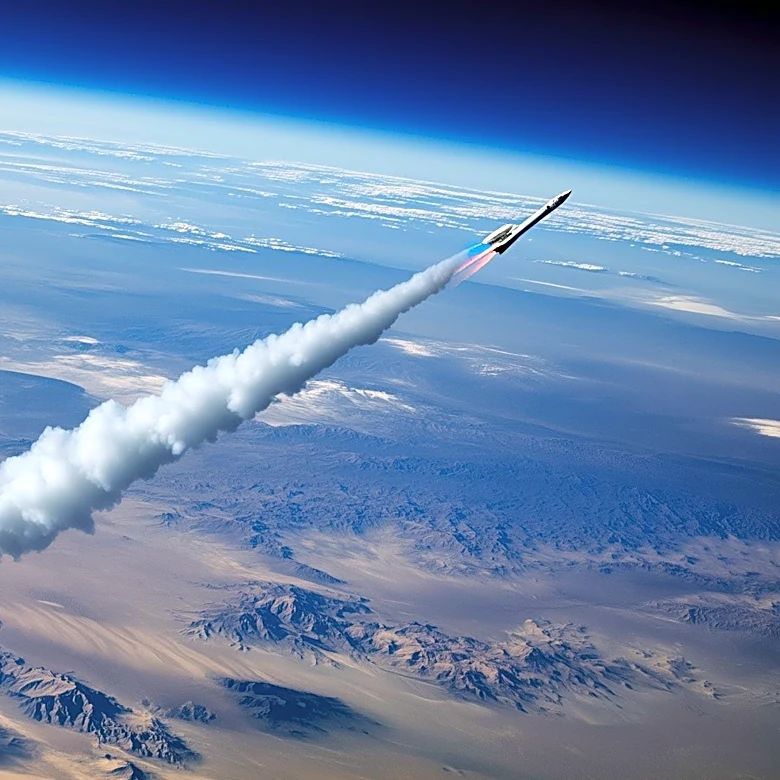
China has postponed the launch of its robotic Chang'e-7 mission, which was designed to search for water ice at the moon's south pole. The mission, initially expected to lift off as early as Sunday evening or Monday morning Beijing time, 'cannot take place
during the planned window this year,' according to a statement from the China Manned Space Engineering Office, shared by Chinese state media. The precise reason for the delay was not immediately clear, with state media only stating that the 'lunar probe does not meet launch conditions' and that the assessment followed principles of prudence and mission success. Wiphu Rujopakarn, executive director of the National Astronomical Research Institute of Thailand (NARIT), indicated the mission is now expected next year, possibly in spring or mid-summer, citing challenging technical requirements and weather conditions, specifically high-altitude winds in southern China.
Why It's Important?
This postponement has significant implications for the ongoing space race between the United States and China, particularly concerning the lunar south pole. Both nations are vying to establish settlements in this region, where water ice is believed to be abundant within shadowy craters. The ability to locate and utilize lunar water resources is crucial for deep-space exploration, as it can be converted into breathable air, drinking water, or rocket fuel. While the U.S. has detected and estimated water ice stores using remote sensors, no mission has yet directly analyzed lunar water, which Chang'e-7 aimed to be the first to do. The delay could put the U.S. back on a more competitive footing, as several American spacecraft are also targeting the same lunar region within the next year, including missions from Astrobotic Technologies and Blue Origin, which may carry NASA's VIPER rover designed to hunt for water ice.
What's Next?
The Chang'e-7 mission is now anticipated to launch next year, potentially during windows in spring or mid-summer, as indicated by NARIT. The Chinese team will likely address the technical and weather-related issues that led to the delay. Meanwhile, U.S. companies like Astrobotic Technologies and Blue Origin are proceeding with their own lunar missions, with Astrobotic's Griffin lander potentially launching to the moon's south pole as soon as late 2026, and Blue Origin planning up to two robotic landers next year, one of which might include NASA's VIPER rover. The success of these upcoming missions will be closely watched as the competition to understand and utilize lunar resources intensifies. The delay also provides an opportunity for further international collaboration or adjustments in mission strategies for all parties involved in lunar exploration.
Beyond the Headlines
The race to the moon's south pole and the pursuit of lunar water ice represent a pivotal shift in space exploration from mere exploration to resource utilization. As Yuqi Qian, a lunar geologist at the University of Hong Kong, noted, China's lunar program is transitioning from an exploration program to a resource utilization program, aiming for more sustainable lunar exploration using lunar resources. This paradigm shift underscores the long-term vision of establishing permanent human presence beyond Earth. The technical challenges and delays faced by missions like Chang'e-7 highlight the extreme difficulty and complexity of operating in the lunar environment, particularly in uncharted territories like crater rims. The ethical and legal frameworks for resource extraction in space are still evolving, and the success or failure of these early missions will undoubtedly influence future international agreements and policies regarding lunar resource ownership and utilization.