
What's Happening?
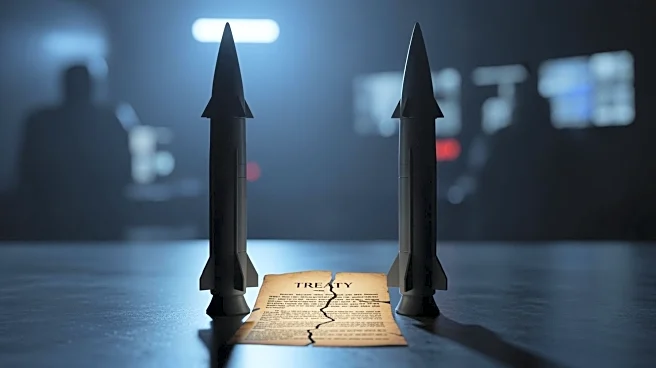
The New START treaty, the last remaining nuclear arms control agreement between the United States and Russia, is set to expire in February 2026. This treaty aimed to reduce and limit the number of strategic
nuclear warheads. Its expiration could lead to a lack of regulations on nuclear weapon caps. The Nuclear Non-Proliferation Treaty (NPT) remains in place, with 190 signatories committed to nuclear disarmament. However, challenges persist, as four nuclear powers remain outside the NPT, and tensions exist between nuclear and non-nuclear states. The potential end of the New START treaty raises concerns about the future of nuclear disarmament efforts.
Why It's Important?
The expiration of the New START treaty could have significant implications for global nuclear stability. Without this treaty, there would be no formal limits on the number of strategic nuclear warheads, potentially leading to an arms race. This development could strain U.S.-Russia relations and impact global security dynamics. The situation underscores the challenges facing nuclear disarmament efforts, as geopolitical tensions and differing national interests complicate negotiations. The continuation of the NPT is crucial, but its effectiveness is limited by the absence of key nuclear powers and ongoing rifts between nuclear and non-nuclear states.
What's Next?
As the expiration date for the New START treaty approaches, diplomatic efforts may intensify to negotiate a new agreement or extend the current one. The U.S. and Russia will need to engage in discussions to address mutual concerns and find common ground on nuclear arms control. The international community, including other nuclear and non-nuclear states, may also play a role in advocating for continued disarmament efforts. The outcome of these negotiations will be critical in shaping the future of global nuclear policy and ensuring stability in international relations.