




What's Happening?
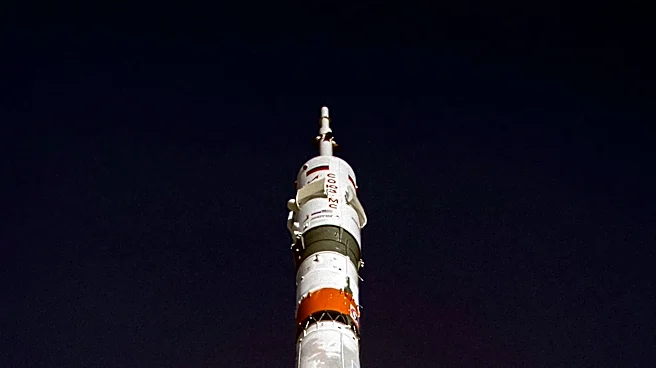
In September 1983, a Soyuz rocket caught fire on the launch pad at Baikonur, with cosmonauts Vladimir Titov and Gennady Strekalov aboard. A malfunction in a side booster led to a fire that severed the cables for the abort command, leaving the crew unable
to activate the escape system. The situation was salvaged by a backup radio command, requiring two controllers to press their buttons within five seconds of each other. This quick action enabled the escape tower to fire, pulling the crew capsule away from the burning rocket just seconds before it exploded. The incident is often recounted as a lucky escape, but it highlights the importance of backup systems and procedural safeguards in space missions.
Why It's Important?
The Soyuz rocket incident underscores the critical role of backup systems and human intervention in ensuring the safety of space missions. It serves as a reminder of the inherent risks in space exploration and the need for robust safety protocols. The successful use of a backup radio command in this case demonstrates the importance of having multiple layers of safety measures to protect crew members. This event also highlights the potential consequences of technical failures and the necessity for continuous improvement in spacecraft design and emergency procedures. As space exploration advances, lessons from past incidents like this one are vital for enhancing safety and reliability.