


What's Happening?
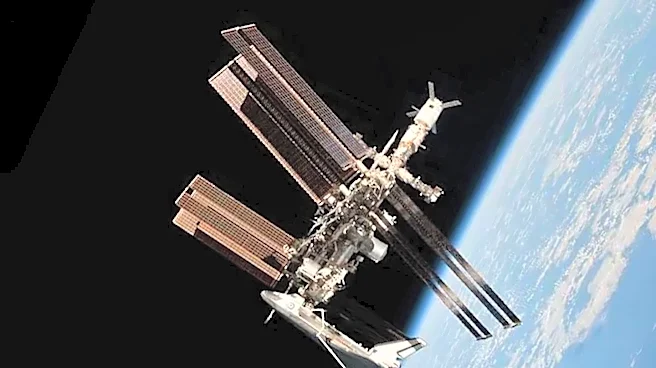
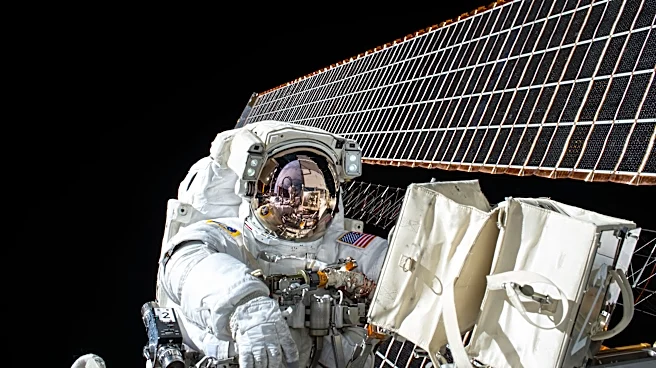
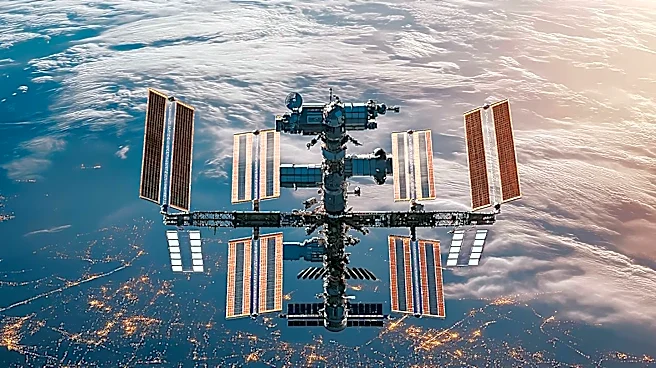
NASA astronaut Anil Menon and Canadian Space Agency astronaut Joshua Kutryk successfully installed the eighth and final International Space Station Roll-Out Solar Array (IROSA) during a seven-hour spacewalk. This mission marked the 101st U.S. spacewalk. The
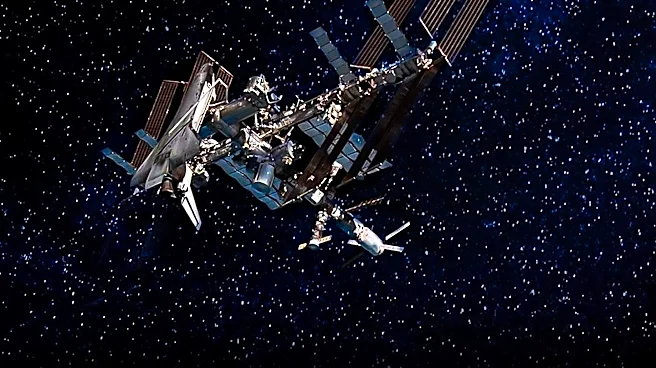
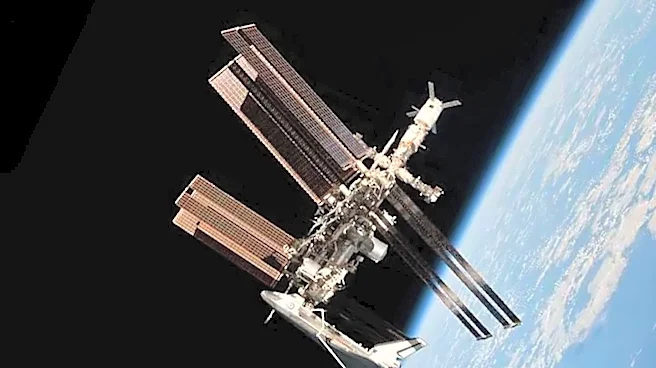
installation concludes a power-generation upgrade that commenced in 2021 and involved 18 spacewalks. These new compact deployable solar arrays are designed to supplement the ISS's original power system, addressing the increasing electrical demands from scientific experiments, life-support systems, and other onboard technology. The upgrade boosts the ISS's power-generation capacity from 160 kilowatts to 215 kilowatts. The spacewalk on November 5, 2026, followed an earlier spacewalk on October 29, 2026, where Kutryk and Menon also worked on installing a new roll-out solar array and performed preparatory tasks for the subsequent spacewalk.
Why It's Important?
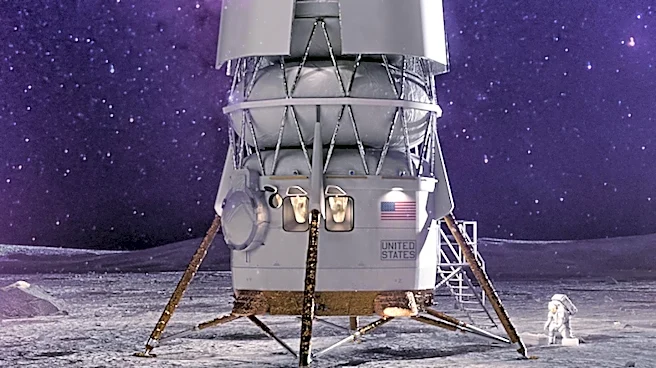
The completion of the ISS solar array upgrade is crucial for the station's continued operational viability and its role in scientific research. The increased power capacity ensures that the ISS can support a growing number of scientific experiments and maintain its life-support systems effectively, which is vital as NASA plans to operate the station through 2030. This development also has implications for the future of commercial space stations, as companies like Axiom Space are adopting similar IROSA technology for their planned stations, such as Axiom Station, scheduled for launch in 2028. The success of these spacewalks underscores the ongoing necessity of human spaceflight for complex installation and maintenance tasks in the challenging space environment, despite advancements in robotics. The enhanced power infrastructure will facilitate continued microgravity research and technology preparation for future missions to the Moon and Mars.
What's Next?
With the final solar array installed, the International Space Station is now equipped with enhanced power capabilities, supporting its operations through 2030. This upgrade will allow for more extensive scientific research and technological development aboard the station. For commercial space ventures, the successful implementation of IROSA technology on the ISS provides a proven model for power generation, which is being adopted by companies like Axiom Space for their own commercial stations. Astronauts Anil Menon and Joshua Kutryk are scheduled to return to Earth in April and March, respectively, after their extended stays on the ISS. The focus will now shift to maximizing the utilization of the increased power for scientific endeavors and preparing for the transition to commercial space stations as the ISS approaches its planned operational end date.
Beyond the Headlines
The successful installation of the final solar array on the ISS highlights a broader trend in space exploration: the increasing reliance on and development of robust, long-term infrastructure in orbit. This not only extends the scientific utility of the ISS but also paves the way for future commercial and governmental space endeavors. The adoption of IROSA technology by private companies like Axiom Space signifies a critical step towards a more privatized and commercially driven space economy. This shift could lead to accelerated innovation, reduced costs for space access, and a wider range of opportunities for research and development in microgravity. Furthermore, the continued necessity of spacewalks for complex tasks underscores the unique and irreplaceable role of human astronauts in space, even as automation advances, emphasizing the blend of human ingenuity and technological progress required for sustained space exploration.