

What's Happening?
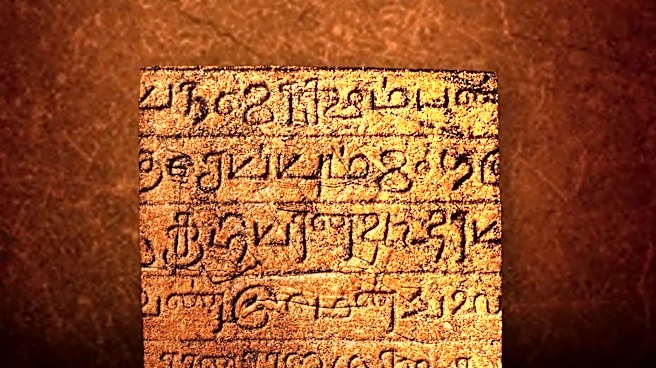
Archaeologists in Iraq have unearthed a rare 2,600-year-old Assyrian stele of King Ashurbanipal at Nineveh's Shamash Gate. This discovery comes nearly a decade after ISIS damaged the ancient city. The stele, a two-meter-high stone monument, celebrates
the building projects of King Ashurbanipal, who ruled the Neo-Assyrian Empire at its peak. The artifact was found during restoration work by a team of Iraqi and American researchers. The monument features detailed cuneiform writing and carved portraits of kings, providing insights into the historical and cultural significance of the Assyrian civilization. The Nineveh Department of Antiquities and Heritage has moved the monument to its headquarters for further study.
Why It's Important?
The discovery of the Assyrian stele is significant as it highlights the rich historical and cultural heritage of the region, which has been under threat due to past conflicts and deliberate destruction by ISIS. The stele not only provides valuable information about the Assyrian civilization but also symbolizes the resilience and efforts to preserve and restore cultural heritage in Iraq. This find contributes to the understanding of Mesopotamian history and underscores the importance of protecting archaeological sites from destruction and looting.
What's Next?
Local officials are considering whether to display the restored monument at its original location by the Shamash Gate or place it inside the planned Mosul Civilization Museum. The ongoing restoration and archaeological efforts in the region aim to support the cultural recovery of the Nineveh plains. The discovery is expected to encourage further archaeological work and international collaboration to uncover and preserve more historical artifacts in Iraq.