



What's Happening?
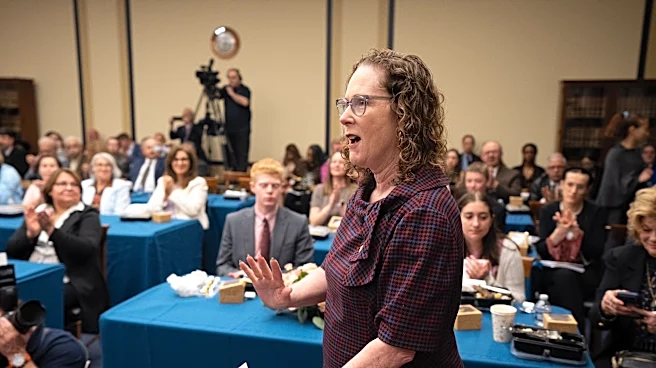
Representatives Pramila Jayapal (D-Washington) and Jennifer McClellan (D-Virginia) are scheduled to deliver keynote addresses at the 'Broadband and AI in the Next Congress' conference on December 1. Their participation brings the total number of congressional
members at the event to six. Rep. Jayapal is a key figure in drafting artificial intelligence legislation, co-leading the House version of the AI Civil Rights Act. This proposed legislation aims to prevent companies from using biased algorithms in critical decisions and mandates testing before and after deployment. In October 2026, she also introduced a framework for a national AI charter, which would require AI companies to meet public-benefit conditions. Rep. McClellan, who represents Virginia's Fourth Congressional District, is focused on AI-ready networks. She co-introduced the bipartisan AI-Ready Networks Act (H.R. 7783) with Rep. Jay Obernolte (R-California) in March 2026. This bill would direct the National Telecommunications and Information Administration to report on the adoption of AI in U.S. commercial telecommunications networks. Virginia is notable for hosting the world's largest concentration of data centers, and McClellan previously sponsored the Virginia Clean Economy Act.
Why It's Important?
The involvement of Representatives Jayapal and McClellan in the 'Broadband and AI' conference underscores the growing legislative focus on artificial intelligence and its integration with telecommunications infrastructure in the U.S. Rep. Jayapal's work on the AI Civil Rights Act and a national AI charter highlights a significant push for ethical AI development and deployment, aiming to protect citizens from algorithmic bias in high-stakes decisions. This could lead to new regulatory frameworks impacting technology companies and industries that rely on AI for critical operations. Rep. McClellan's efforts with the AI-Ready Networks Act are crucial for understanding and preparing U.S. telecommunications networks for the demands of AI. Given Virginia's role as a major data center hub, her legislative initiatives could influence how states manage energy consumption and infrastructure development related to AI, potentially affecting both the tech industry and local economies. The conference itself serves as a platform for policymakers, industry leaders, and experts to discuss the future of AI and broadband, shaping the discourse and potential legislative actions in the upcoming congressional sessions.
What's Next?
The 'Broadband and AI in the Next Congress' conference on December 1 will serve as a critical forum for discussions that could influence future U.S. policy on artificial intelligence and telecommunications. The keynotes from Representatives Jayapal and McClellan are expected to further articulate their legislative priorities, potentially galvanizing support for their respective bills, the AI Civil Rights Act and the AI-Ready Networks Act. Following the conference, there may be increased legislative activity in Congress, with potential hearings, markups, or further introductions of bills related to AI ethics, network infrastructure, and data center regulations. Stakeholders, including technology companies, civil rights organizations, and telecommunications providers, will likely closely monitor these developments and engage in lobbying efforts to shape the final legislation. The National Telecommunications and Information Administration (NTIA) could also begin preparations for the report mandated by the AI-Ready Networks Act, which would provide valuable data on AI adoption in U.S. commercial networks and inform future policy decisions.