




What's Happening?
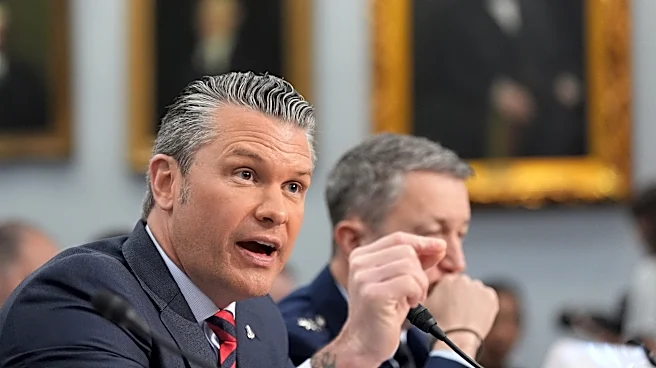
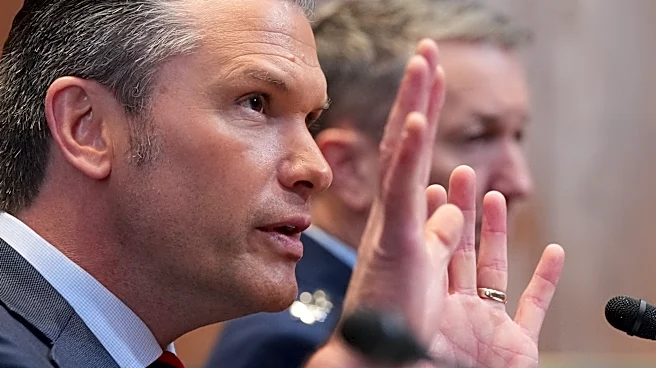
Defense Secretary Pete Hegseth and Gen. Dan Caine, chairman of the Joint Chiefs of Staff, faced intense questioning from Congress regarding the Trump administration's handling of the Iran war. Lawmakers from both parties expressed frustration over the lack
of a clear strategy to end the conflict and the rising costs associated with it. The closure of the Strait of Hormuz by Iran has disrupted global oil supplies, leading to increased energy prices. The administration's proposed $1.45 trillion defense budget is under scrutiny, with calls for a detailed plan to address the financial impact of the war.
Why It's Important?
The ongoing conflict with Iran and the closure of the Strait of Hormuz have significant implications for global energy markets and U.S. foreign policy. The rising costs of the war and the lack of a clear exit strategy are causing concern among lawmakers, which could impact future defense spending and military engagements. The situation also highlights the challenges of maintaining international alliances and the potential economic consequences of prolonged military conflicts.
What's Next?
Congress is seeking a comprehensive accounting of the war's costs and a final request for supplemental funding. The administration's ability to secure support for its defense budget and strategy will be crucial in determining the future of U.S. involvement in the region. The potential for bipartisan support to halt the conflict without explicit congressional approval remains uncertain.