
What's Happening?
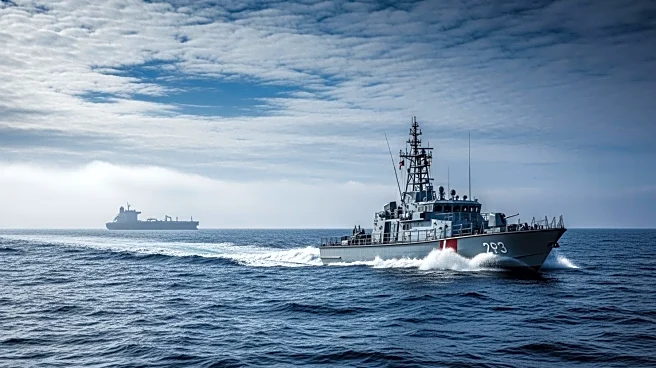
U.S. naval forces are actively pursuing a tanker named Bella 1, which is linked to Venezuela, in Caribbean waters. The vessel has been evading capture by refusing to allow U.S. Coast Guard crews to board.
Specialized teams are preparing for a potential forced seizure of the tanker. This pursuit is part of ongoing efforts by the U.S. to enforce sanctions against Venezuela, aimed at curbing the flow of oil revenue to the government of President Nicolás Maduro. According to Military.com, the U.S. Energy Information Administration has reported a significant shift in Venezuela's oil exports, with a decrease in shipments to the U.S. and an increase in exports to China and Malaysia. This shift is attributed to complex ownership chains and ship-to-ship transfers that obscure the origin of the cargo.
Why It's Important?
The pursuit of the Bella 1 tanker underscores the broader geopolitical tensions between the U.S. and Venezuela. The U.S. has imposed sanctions on Venezuela in an attempt to pressure President Maduro's government, which it accuses of human rights abuses and undermining democracy. The redirection of Venezuelan oil exports from the U.S. to countries like China and Malaysia highlights the challenges the U.S. faces in enforcing these sanctions. The situation also reflects the global complexities of oil trade, where ownership and transfer tactics can circumvent traditional tracking methods, potentially undermining U.S. foreign policy objectives. The outcome of this pursuit could have significant implications for U.S.-Venezuela relations and the effectiveness of international sanctions.
What's Next?
If the U.S. successfully seizes the Bella 1, it could set a precedent for future enforcement actions against other vessels linked to sanctioned countries. However, analysts warn that even if the Bella 1 is stopped, other tankers may continue to reroute, maintaining the flow of revenue to Venezuela. The U.S. may need to consider additional diplomatic or economic measures to strengthen its sanctions regime. The international community, particularly countries involved in the redirected oil trade, may also respond to the U.S.'s actions, potentially affecting global oil markets and diplomatic relations.