

What's Happening?
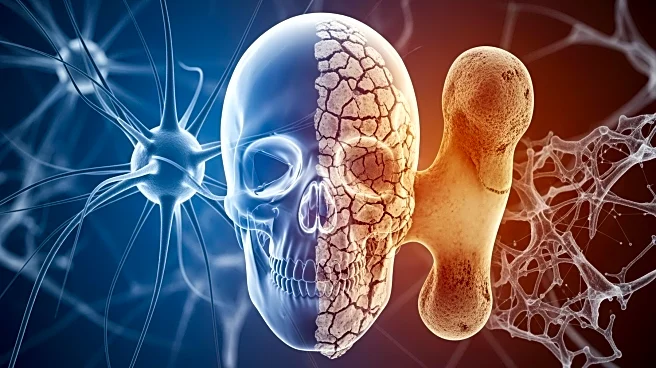
An international team of scientists, led by Dr. Johannes Lemke at the University of Leipzig Medical Center, has identified a single gene, GRIN2A, that can cause severe mental illnesses such as schizophrenia, anxiety, and depression. This discovery challenges
the long-held belief that mental illnesses are caused by a complex interplay of numerous genetic factors. The GRIN2A gene, when mutated, disrupts the normal functioning of NMDA receptors in the brain, which are crucial for communication between neurons. This disruption can lead to psychiatric symptoms, including psychosis and mood disorders, often appearing in childhood. The study involved 235 individuals with GRIN2A mutations and compared their health records to over 5 million people in Finland, revealing a significantly higher risk of developing mental disorders among those with the mutation.
Why It's Important?
The identification of the GRIN2A gene as a cause of mental illness represents a significant breakthrough in understanding the genetic basis of psychiatric disorders. This discovery opens the door to targeted treatments that address the underlying genetic cause rather than just managing symptoms. For instance, some patients with GRIN2A-related disorders have shown improvement with L-serine supplements, which help compensate for the disrupted NMDA receptor function. This finding suggests that personalized medicine, based on genetic testing, could become a viable approach for treating certain mental illnesses. The potential to identify and treat these conditions early could transform the lives of individuals and families affected by these disorders, reducing the stigma and improving outcomes.
What's Next?
Further research is needed to confirm these findings and develop standardized treatment protocols. Clinical trials are essential to determine the efficacy and safety of treatments like L-serine for individuals with GRIN2A mutations. Genetic testing could become a routine part of diagnosing and treating mental illnesses, allowing for more personalized and effective interventions. Additionally, there is a need for increased awareness and education among healthcare providers and the public about the genetic components of mental illness. This could lead to earlier diagnosis and intervention, potentially preventing the progression of severe symptoms.
Beyond the Headlines
The discovery of the GRIN2A gene's role in mental illness highlights the importance of genetic research in understanding complex disorders. It also raises ethical considerations regarding genetic testing and the potential for discrimination based on genetic information. Laws like the Genetic Information Nondiscrimination Act (GINA) provide some protection, but ongoing dialogue is necessary to address these issues. Furthermore, this research underscores the need for a multidisciplinary approach to treatment, involving neurologists, psychiatrists, and genetic counselors to provide comprehensive care for affected individuals.