






What's Happening?
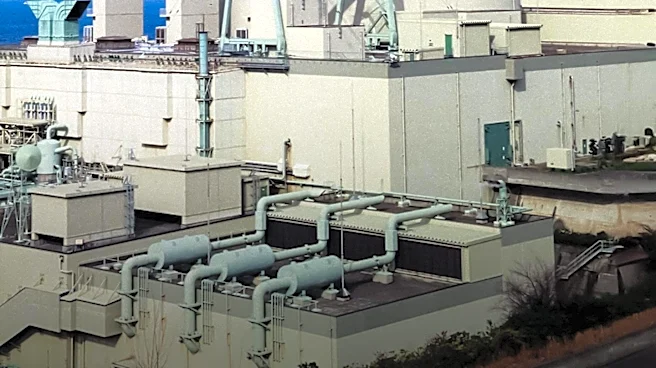
Researchers have successfully detected antineutrinos emitted from nuclear reactors that have been shut down, using the Double Chooz experiment in France. This marks the first time scientists have measured the lingering antineutrino signal, which is produced
by radioactive decay in spent nuclear fuel. The study, published in Physical Review Letters, provides a new method for nuclear inspectors to verify reactor activity and monitor spent-fuel inventories, even when facilities are offline.
Why It's Important?
The ability to detect antineutrinos from shut-down reactors offers a novel tool for nuclear monitoring and non-proliferation efforts. Antineutrinos can pass through reactor walls and other barriers, providing a means to gather information about nuclear materials that are otherwise difficult to observe. This advancement could enhance the transparency and security of nuclear facilities, contributing to global efforts to prevent the spread of nuclear weapons.
Beyond the Headlines
The detection of antineutrinos from inactive reactors could lead to new technologies for monitoring nuclear materials, potentially transforming how nuclear facilities are regulated and inspected. This development also highlights the ongoing innovation in particle physics and its applications in addressing global security challenges. The research underscores the importance of international collaboration in advancing scientific knowledge and its practical applications.