





What's Happening?
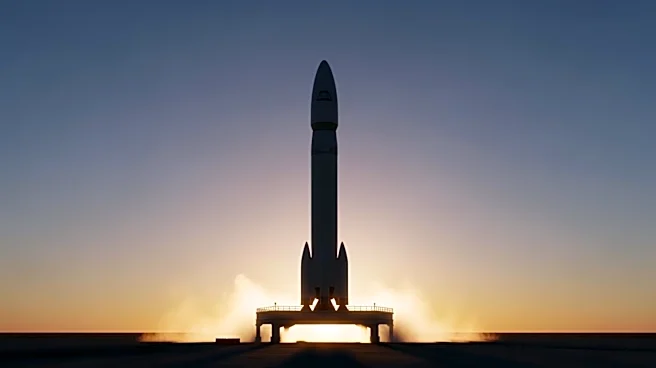
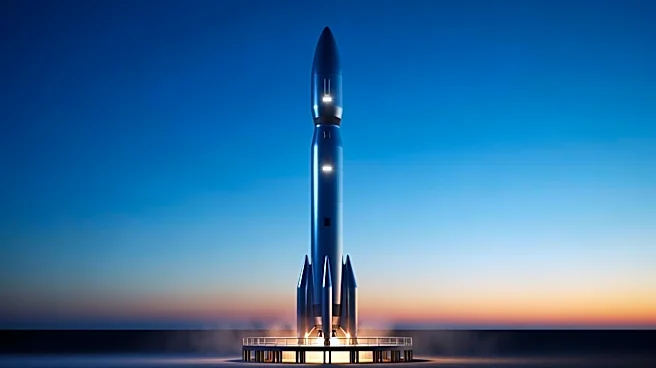
SpaceX is preparing for the debut launch of its Starship Version 3 (V3) on May 19, 2026, from its Starbase facility in South Texas. This launch marks a significant upgrade in the Starship's design, featuring a more powerful and resilient rocket. The V3 model
includes a reduced count of three grid fins on the Super Heavy booster and a thermal protection system with 40,000 hexagonal stainless-steel tiles on the upper stage. The mission, designated as Flight 12, will deploy 22 dummy Starlink satellites to test payload delivery mechanisms. The upgraded Starbase Launch Pad 2 will be used for this mission, which is part of SpaceX's efforts to support NASA's Artemis program, aiming for rapid reuse, high flight rates, and orbital refueling for future lunar and Mars missions.
Why It's Important?
The launch of Starship V3 is crucial for SpaceX's long-term goals of supporting NASA's Artemis program, which aims to land astronauts on the moon. The improvements in the V3 model, such as enhanced thermal protection and reduced grid fins, are designed to increase the rocket's resilience and efficiency. This launch will test the vehicle's ability to handle complex orbital maneuvers and payload deliveries, which are essential for future deep-space missions. Successful deployment of the dummy satellites will demonstrate SpaceX's capability to support future orbital infrastructure networks, potentially revolutionizing space travel and exploration.
What's Next?
Following the launch, SpaceX will analyze the performance of the Starship V3 to refine its design further. The company aims to demonstrate the vehicle's ability to perform uncrewed moon landings and return safely to lunar orbit, a critical step before crewed missions. SpaceX's progress will be closely monitored by NASA, as the agency plans to use the Starship for its Artemis missions. The success of this launch could accelerate the timeline for future missions to the moon and Mars, positioning SpaceX as a leader in space exploration technology.