

What's Happening?
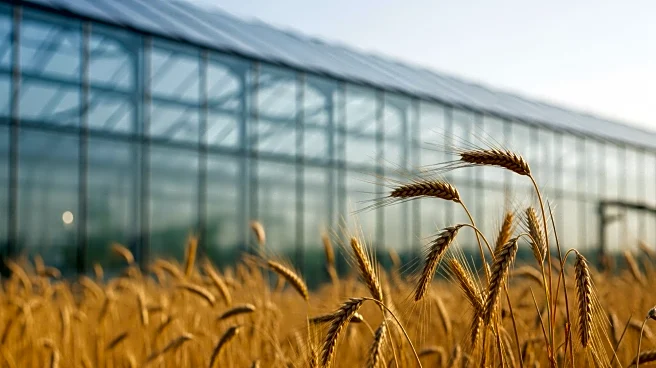
Researchers have made significant progress in developing self-fertilizing crops through genetic engineering. By using the CRISPR gene-editing tool, scientists have enabled wheat crops to produce their own fertilizer by assisting specific soil bacteria
in nitrogen fixation. This advancement allows plants to absorb necessary nutrients without relying on synthetic fertilizers. The concept has been successfully tested in plants like Lotus japonicus and barley, showing potential for broader application. This innovation aims to address the environmental and economic challenges posed by excessive fertilizer use, which is prevalent in U.S. agriculture. In 2023, the U.S. used nearly 20.1 million metric tons of fertilizer, with nitrogen being the most used. The new method could significantly reduce the ecological consequences of fertilizer overuse, such as waterway pollution and greenhouse gas emissions.
Why It's Important?
The development of self-fertilizing crops represents a transformative shift in agricultural practices, potentially reducing dependency on synthetic fertilizers. This innovation could lead to significant environmental benefits by decreasing nitrogen runoff into waterways, which creates 'dead zones' that harm aquatic life. Additionally, it could mitigate the release of nitrous oxide, a potent greenhouse gas. Economically, self-fertilizing crops could lower costs for farmers and reduce exposure to global supply disruptions and energy price fluctuations. This technology also holds promise for improving food security in developing regions where access to fertilizers is limited, offering a sustainable solution to enhance crop yields without additional financial burdens.
What's Next?
The next steps involve expanding the application of this technology to other crops and regions. Researchers will likely focus on refining the genetic modifications to ensure safety and effectiveness across diverse agricultural environments. Regulatory approval and public acceptance will be crucial for widespread adoption. Stakeholders, including policymakers, agricultural businesses, and environmental groups, may engage in discussions to address potential ethical and ecological concerns. The success of self-fertilizing crops could inspire further innovations in sustainable agriculture, potentially leading to a broader shift towards environmentally friendly farming practices.
Beyond the Headlines
The introduction of self-fertilizing crops could have profound implications for global agriculture, challenging traditional farming methods and prompting a reevaluation of agricultural policies. This development raises ethical questions about genetic modification and its long-term effects on ecosystems. It also highlights the need for international collaboration in research and regulation to ensure equitable access to this technology. As the agricultural sector grapples with climate change and resource scarcity, self-fertilizing crops could become a cornerstone of sustainable food production, influencing cultural attitudes towards farming and food security.