
What's Happening?
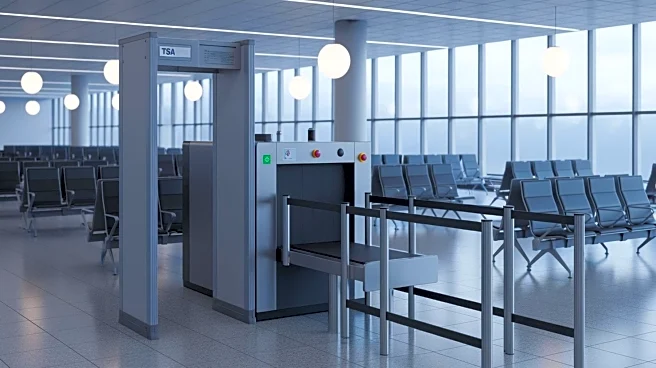
The ongoing partial government shutdown has led to significant disruptions in U.S. air travel, primarily due to a high number of Transportation Security Administration (TSA) agents calling out of work after missing paychecks. This has resulted in unpredictable
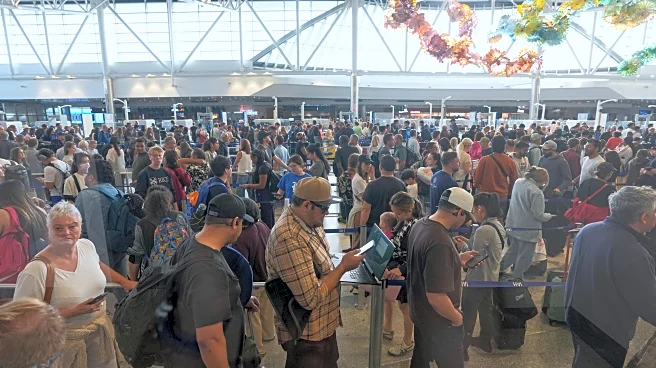
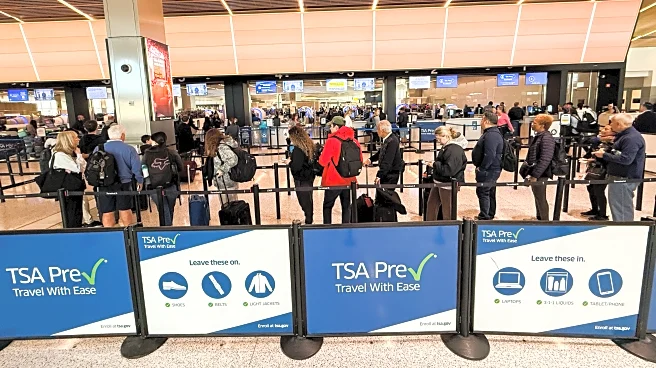
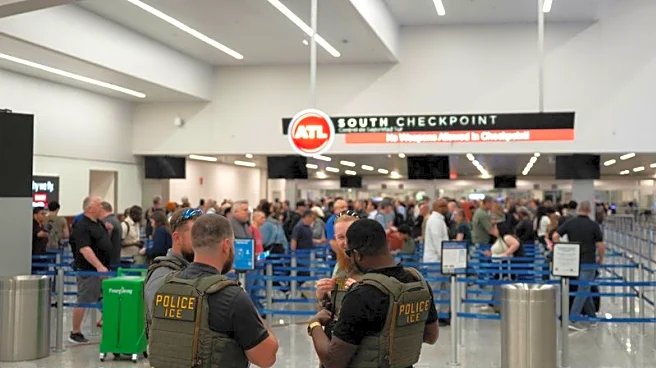
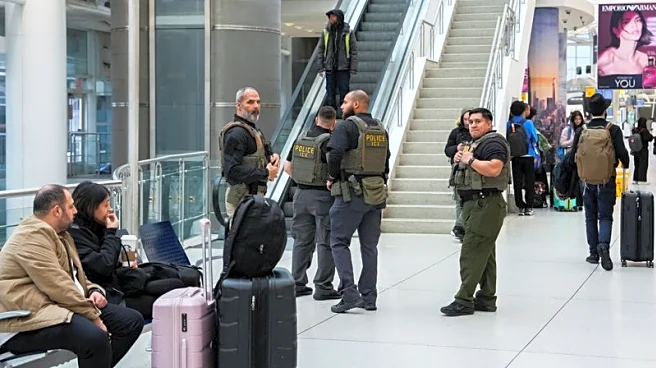
wait times at airports, with some travelers experiencing minimal delays while others face hours-long queues, leading to missed flights. Major airports like Atlanta and Houston have reported up to 40% of TSA staff calling out, causing severe delays. The situation is further complicated by the suspension of real-time TSA wait-time tracking at several airports, leaving passengers uncertain about how early to arrive for their flights. The Department of Homeland Security has deployed Immigration and Customs Enforcement (ICE) agents to assist with managing lines, but they are not involved in security screening.
Why It's Important?
The TSA staffing shortages highlight the broader impact of the government shutdown on essential services, affecting millions of travelers and the aviation industry. The unpredictability of airport wait times can lead to significant economic losses for airlines due to missed flights and delays. Additionally, the deployment of ICE agents in airports has raised concerns among flight attendants' unions, emphasizing the need for a resolution to the shutdown. The situation underscores the critical role of government funding in maintaining national infrastructure and services, with airline CEOs urging political leaders to reach an agreement to prevent future disruptions.
What's Next?
As the shutdown continues, the pressure mounts on Congress to reach a funding agreement, especially with another missed paycheck for TSA staff looming. The situation may worsen if no resolution is found, potentially leading to further disruptions in air travel. Stakeholders, including airlines and unions, are likely to increase their advocacy efforts to push for a swift resolution. The ongoing chaos may also prompt discussions on long-term reforms to prevent similar situations in the future, including potential changes to TSA funding and operations.