







What's Happening?
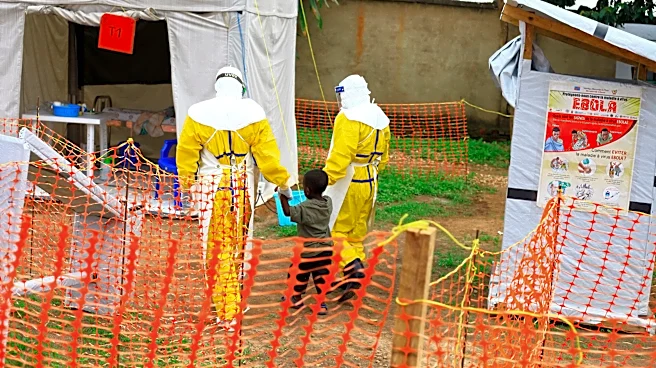
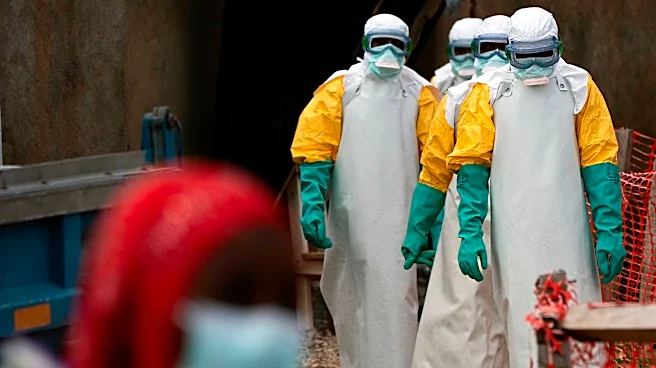
A new Ebola outbreak has been confirmed in Congo's Ituri province, marking the 17th occurrence of the disease in the country since it first emerged in 1976. The Africa Centres for Disease Control and Prevention reported 246 suspected cases and 65 deaths.
The outbreak is concentrated in the Mongwalu and Rwampara health zones, with additional cases in Bunia, the provincial capital. The situation is complicated by the region's remote location, poor infrastructure, and ongoing violence from armed groups, which have displaced thousands. The Africa CDC has expressed concern over the potential spread to neighboring Uganda and South Sudan due to population movements and inadequate contact tracing. An urgent meeting has been convened with health authorities from Congo, Uganda, and South Sudan to coordinate response efforts.
Why It's Important?
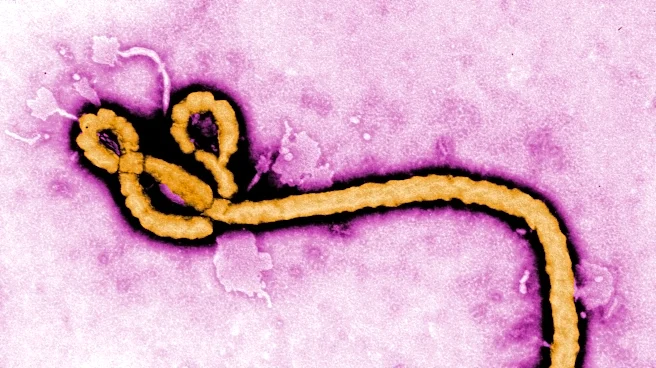
The outbreak poses significant public health challenges due to its location in a remote and conflict-ridden area, which complicates containment efforts. The proximity to international borders raises the risk of cross-border transmission, potentially affecting regional stability and public health. The outbreak's strain is still being characterized, which could impact the effectiveness of existing vaccines and treatments. The situation underscores the need for robust international cooperation and resource mobilization to prevent a wider epidemic. The response will test the capacity of local and international health systems to manage such crises, especially in areas with limited infrastructure and ongoing security issues.
What's Next?
Efforts are underway to enhance cross-border surveillance and preparedness. The Africa CDC and its partners are focusing on immediate response priorities, including safe burials and resource mobilization. The identification of the Ebola strain will be crucial for determining the appropriate medical response, including the deployment of vaccines. The international community may need to provide additional support to address logistical challenges and funding gaps. The situation requires continuous monitoring to prevent further spread and to ensure that affected communities receive necessary medical and humanitarian assistance.
Beyond the Headlines
The outbreak highlights the intersection of health crises and security challenges in regions like Ituri, where armed conflict exacerbates public health vulnerabilities. It raises ethical questions about the allocation of resources in conflict zones and the responsibilities of international actors in supporting fragile states. The situation may prompt a reevaluation of global health strategies, particularly in how they address the complexities of disease outbreaks in unstable regions. Long-term, this could influence policy discussions on global health security and the integration of health and peacebuilding efforts.