






What's Happening?
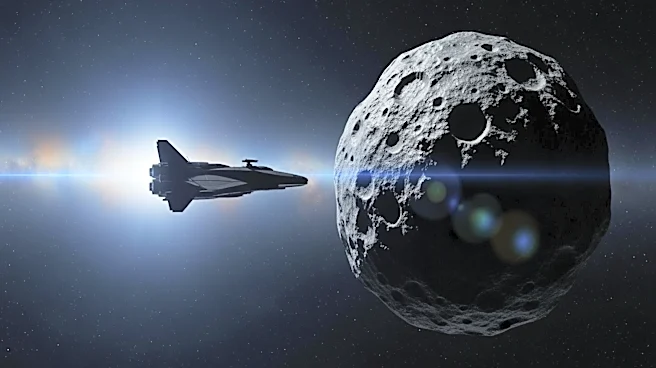
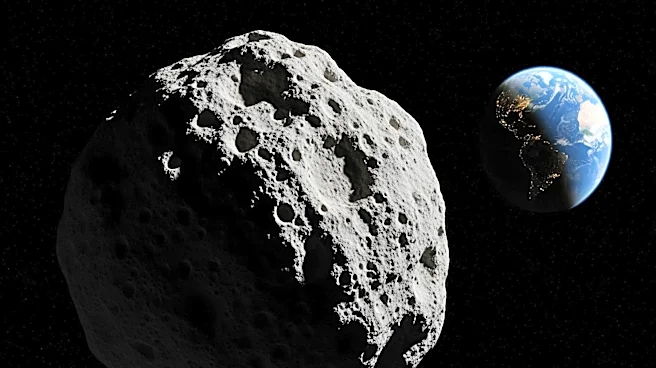
NASA has announced that the asteroid Apophis, named after the ancient Egyptian God of evil and destruction, will pass remarkably close to Earth on April 13, 2029. This event marks the closest approach of a celestial object of its size in documented history,
coming within 20,000 miles of Earth's surface, which is closer than many satellites orbit. Initially discovered in 2004, Apophis was once thought to have a potential impact risk in 2029, 2036, or 2068. However, continuous monitoring and updated calculations have ruled out any collision risk for at least the next 100 years. The asteroid, measuring approximately 1,230 feet across, will be visible to the naked eye during its flyby.
Why It's Important?
The 2029 flyby of Apophis presents a unique opportunity for scientific study, as such close encounters with large asteroids are rare. This event allows scientists to observe and analyze the asteroid's characteristics and behavior in detail, potentially enhancing understanding of similar celestial bodies. The close proximity of Apophis will also enable researchers to study its interaction with Earth's gravitational field, which could alter its spin state. This knowledge is crucial for future planetary defense strategies, as it provides insights into how to manage potential asteroid threats. The event underscores the importance of continued monitoring and research of near-Earth objects.
What's Next?
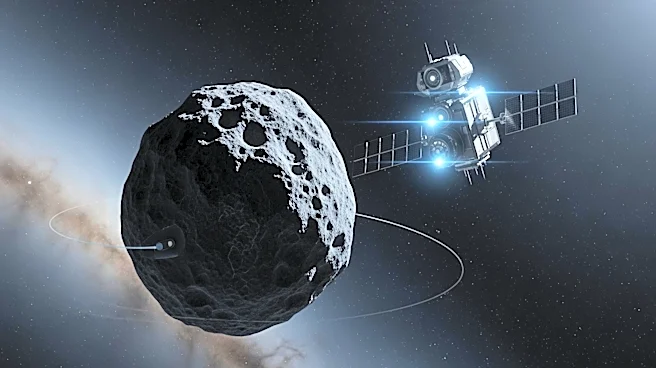
As the 2029 flyby approaches, NASA and other space agencies are likely to intensify their observational efforts to gather as much data as possible. This may include deploying additional telescopes and radar systems to track Apophis' trajectory and physical properties. The scientific community will likely collaborate internationally to maximize the research potential of this event. Public interest and educational outreach may also increase as the date nears, with efforts to inform and engage the public about the significance of the flyby and the broader implications for planetary science and safety.