




What's Happening?
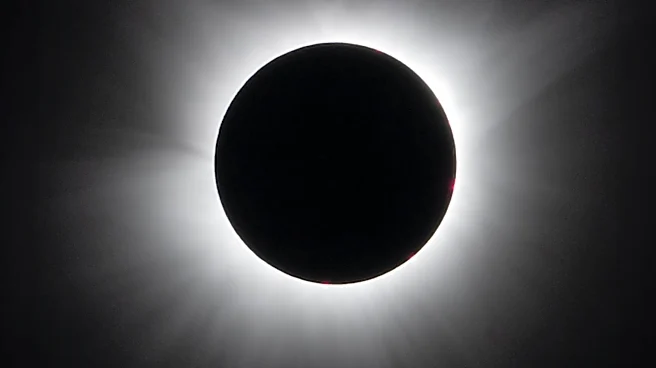
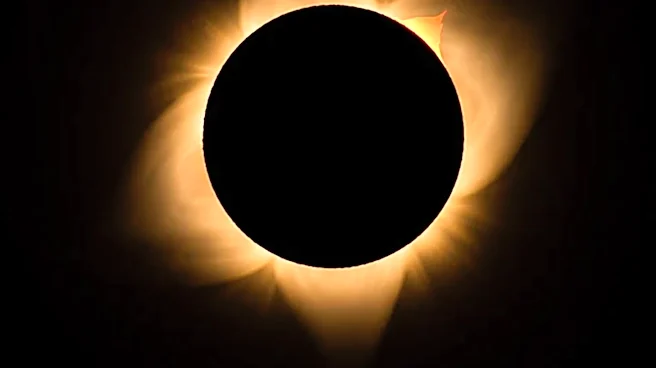
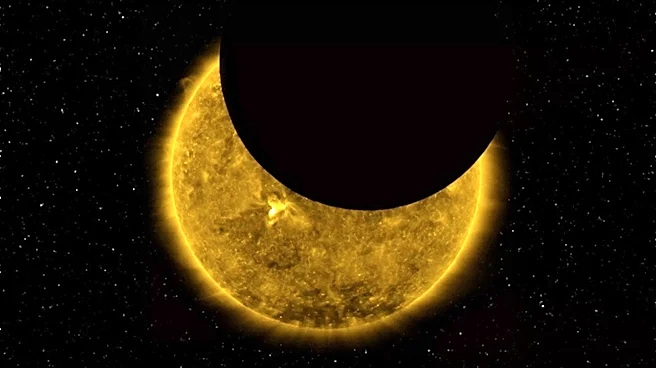
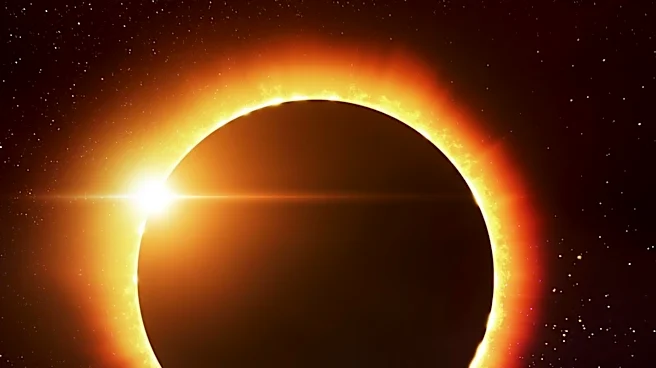
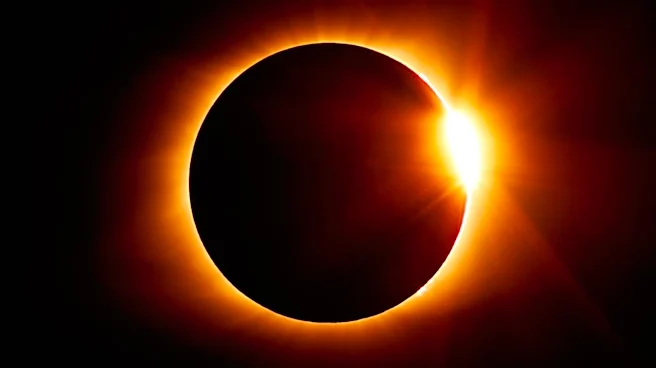
A solar eclipse is set to occur on August 12, 2026, visible across parts of western Europe, Canada, and the northern U.S. The eclipse will be a total eclipse in areas stretching from eastern Greenland to northern Spain, while other regions will experience
a partial eclipse. However, weather conditions, including potential clouds and rain, may obstruct views in some areas. The eclipse will occur in the morning in Alaska and northern Canada, early afternoon in the northern U.S., and evening in western Europe and northwest Africa.
Why It's Important?
Solar eclipses are significant astronomical events that attract widespread public interest and scientific study. The potential for weather to obscure the eclipse highlights the challenges of observing such events, emphasizing the importance of clear skies for optimal viewing. The eclipse provides an opportunity for educational outreach and public engagement in astronomy, as well as scientific research on solar phenomena.
What's Next?
As the eclipse date approaches, weather forecasts will become more precise, allowing observers to plan their viewing locations accordingly. Those in regions with unfavorable weather may need to travel to areas with clearer skies to witness the event. Additionally, safety precautions, such as using eclipse glasses, will be emphasized to prevent eye damage during the eclipse.