


What's Happening?
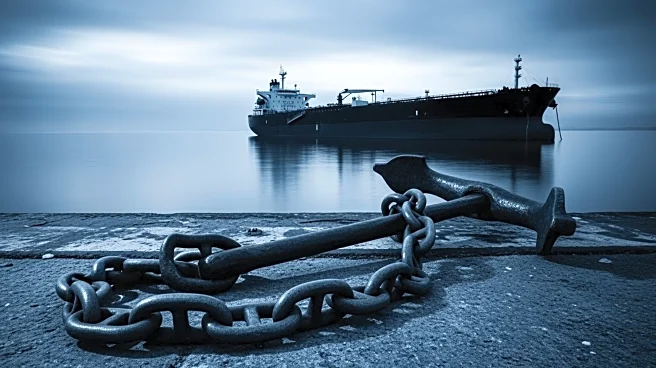
U.S. forces have intercepted an oil tanker off the coast of Venezuela, marking the second such action in less than two weeks. This operation is part of President Trump's intensified efforts to pressure Venezuelan President Nicolás Maduro by enforcing
a blockade on sanctioned oil tankers. The U.S. Coast Guard, with assistance from the Defense Department, stopped the tanker, which was last docked in Venezuela. Homeland Security Secretary Kristi Noem confirmed the operation, emphasizing the U.S.'s commitment to halting the illicit movement of sanctioned oil used to fund narcoterrorism in the region. The tanker, operating under the Panamanian flag, voluntarily stopped and allowed U.S. forces to board. This action follows a previous seizure of a vessel named the Skipper, as part of a broader strategy to disrupt Venezuela's oil exports.
Why It's Important?
The seizure of oil tankers is a significant component of the U.S.'s strategy to exert economic pressure on the Maduro regime, which is accused of narcoterrorism and illegal nationalization of U.S. oil assets. By targeting these vessels, the U.S. aims to cut off a critical revenue stream for Venezuela, potentially destabilizing Maduro's hold on power. This move also underscores the U.S.'s broader geopolitical strategy in the region, which includes combating drug trafficking networks allegedly linked to Venezuela. The actions have drawn criticism from human rights activists and lawmakers concerned about the legality and humanitarian impact of such military interventions.
What's Next?
The U.S. is likely to continue its aggressive stance against Venezuela, with potential for further military actions in the Caribbean and eastern Pacific Ocean. President Trump has indicated that land attacks could be forthcoming, aiming to further isolate Maduro. The international community may respond with diplomatic efforts to mediate the situation, while Venezuela could seek support from allies to counter U.S. actions. The ongoing tension may also impact global oil markets, as Venezuela's ability to export oil is further constrained.