



What's Happening?
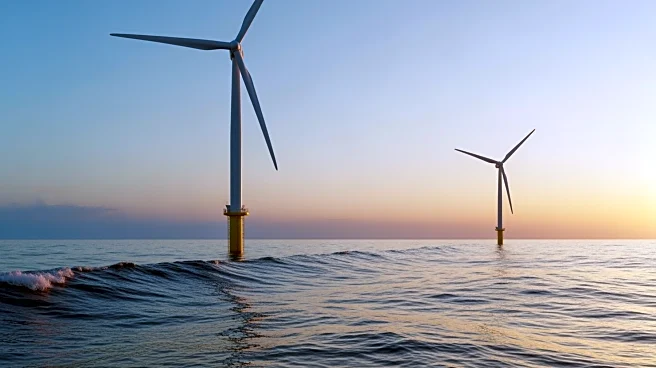
The Trump administration has announced a pause on leases for five major offshore wind projects along the East Coast, citing national security risks identified by the Pentagon. This decision follows a recent federal court ruling that struck down President
Trump's executive order blocking wind energy projects, labeling it as unlawful. The Interior Department, responsible for overseeing offshore wind, will collaborate with the Defense Department to assess and mitigate potential security risks posed by these projects. The projects affected include Vineyard Wind in Massachusetts, Revolution Wind in Rhode Island and Connecticut, Coastal Virginia Offshore Wind, and two projects in New York: Sunrise Wind and Empire Wind. The administration claims that the movement of turbine blades and reflective towers creates radar interference, which could obscure legitimate targets and generate false ones.
Why It's Important?
The pause on these offshore wind projects represents a significant setback for renewable energy efforts in the U.S., particularly as the country seeks to diversify its energy sources and reduce reliance on fossil fuels. Offshore wind is seen as a critical component of the clean energy transition, providing affordable and reliable power. The administration's decision has been criticized by wind energy proponents, who argue that it undermines efforts to build out clean energy infrastructure and could hinder job creation in the renewable sector. The move also highlights ongoing tensions between national security considerations and environmental policy, as the government balances energy development with defense priorities.
What's Next?
The Interior Department will work with the Defense Department to evaluate the security risks associated with these projects. Meanwhile, legal challenges may continue as environmental groups and state governments push back against the administration's actions. The outcome of these assessments and potential legal battles could shape the future of offshore wind development in the U.S. and influence broader energy policy decisions.