






What's Happening?
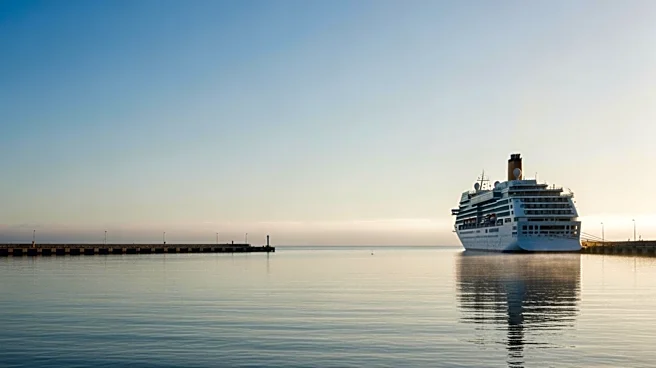
A cruise ship, the MV Hondius, has arrived at the Port of Granadilla in Tenerife, Spain, following a hantavirus outbreak onboard. The World Health Organization (WHO) confirmed that six out of eight people who fell ill on the ship contracted the virus.
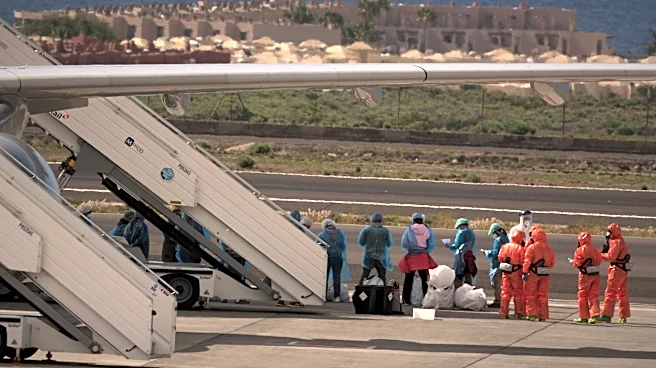
As a precaution, all passengers are considered high-risk contacts. The evacuation process, overseen by global health officials, involves transporting passengers to Tenerife airport in military buses for repatriation via government planes. The WHO has recommended a 42-day quarantine for all passengers. The ship had left Cape Verde for Spain after the outbreak was detected, with the first case believed to have been infected during travel in Argentina and Chile.
Why It's Important?
The hantavirus outbreak on the MV Hondius highlights the challenges of managing infectious diseases in confined environments like cruise ships. The incident underscores the importance of international cooperation in health emergencies, as multiple countries, including the United States, are involved in evacuating their citizens. The outbreak also raises concerns about the spread of infectious diseases through global travel, emphasizing the need for stringent health protocols and rapid response measures. The WHO's involvement and the coordinated evacuation efforts reflect the global health community's commitment to preventing further transmission.
What's Next?
Following the evacuation, passengers will undergo a 42-day quarantine as recommended by the WHO. Countries involved in the evacuation, including the United States, will likely monitor their citizens for any symptoms of hantavirus. The incident may prompt cruise lines to review and enhance their health and safety protocols to prevent similar outbreaks in the future. Additionally, health authorities may increase surveillance and testing for infectious diseases in travel hubs to mitigate risks associated with global travel.