









What's Happening?
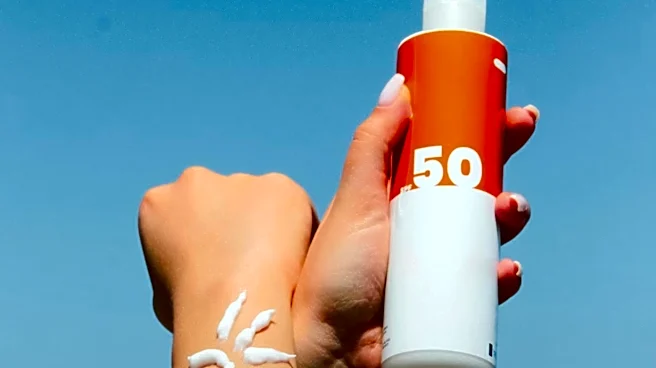
Healthcare professionals are stressing the importance of consistent, year-round use of broad-spectrum SPF 30 or higher sunscreen for skin cancer prevention. This recommendation extends beyond summer months, as UVA exposure is continuous through clouds
and glass, and reflected radiation can increase UV dosage in winter. Clinicians advise integrating sunscreen into daily morning routines, similar to brushing teeth, and selecting affordable, cosmetically acceptable products to improve patient adherence. For individuals with skin of color, tinted mineral sunscreens containing iron oxides are suggested, as they offer additional protection against visible light, which can contribute to hyperpigmentation, including melasma. The focus is on reducing ongoing UV exposure and protecting skin throughout a lifetime, moving away from guilt-tripping patients about past sun exposure.
Why It's Important?
The emphasis on year-round SPF 30+ sunscreen use is crucial for public health in the U.S., directly impacting skin cancer rates and overall skin health. Skin cancer remains a significant concern, and consistent sun protection is a primary preventive measure. This guidance helps to counter the common misconception that sun protection is only necessary during peak summer months or sunny weather. By promoting daily application and product selection tailored to individual needs and skin types, clinicians aim to increase adherence and effectiveness of sun protection strategies. The specific recommendation for tinted mineral sunscreens for patients with skin of color addresses a critical gap in care, acknowledging that visible light can also cause skin damage and hyperpigmentation in these populations, which is often overlooked.
What's Next?
Future developments in skin cancer prevention include ongoing sunscreen innovation, with new active ingredients like bemotrizinol recently approved by the FDA, the first since the late 1990s. Clinicians will continue to educate patients on choosing broad-spectrum SPF 30 or higher and finding formulations suitable for their skin types. The integration of artificial intelligence (AI) and digital skin assessment tools is also being closely watched, with potential to assist in lesion detection and clinical decision-making, particularly in areas with limited access to dermatologists. However, it is emphasized that AI should serve as an adjunct, not a replacement, for clinical assessment, and these technologies need validation across diverse skin tones to ensure responsible use.
Beyond the Headlines
The shift towards personalized and practical counseling in skin cancer prevention highlights a broader trend in healthcare focusing on patient-centered approaches. By making recommendations simple, connecting prevention to existing habits, and using visual education, healthcare providers aim to empower individuals to take proactive steps in their skin health. Addressing overlooked patient groups, such as those with skin of color, older adults, immunosuppressed individuals, and outdoor workers, underscores the need for inclusive and equitable healthcare strategies. The ongoing challenge is to combine technological innovations with fundamental practices like regular self-examinations and timely evaluations, ensuring that prevention remains accessible and effective for all.