
What's Happening?
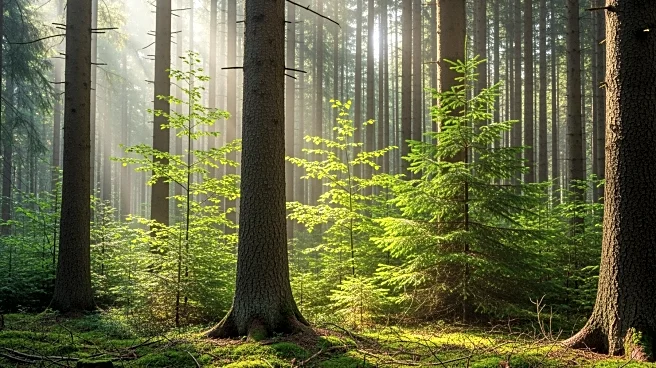
Scotland is undertaking significant efforts to restore its ancient Scots pine forests, which once dominated the landscape as part of the Caledonian Forest. Currently, only one percent of the original forest remains,
scattered across the Highlands. Conservationists emphasize the urgent need to protect these forests due to climate change and disease threats. A study by the James Hutton Institute highlights the biodiversity supported by Scots pines, which are crucial for nearly 1,600 species. Restoration projects, such as the one at Arkaig Forest, focus on removing non-native species and planting native ones to revive these ecosystems.
Why It's Important?
The restoration of Scotland's ancient pine forests is critical for biodiversity and climate change mitigation. These forests support a wide range of species, and their degradation has led to biodiversity loss and reduced carbon storage. Efforts to restore these forests not only aim to preserve biodiversity but also enhance carbon sequestration, which is vital in combating climate change. The projects serve as models for sustainable forest management and highlight the importance of native species in maintaining ecological balance.
What's Next?
Future steps in the restoration projects include accelerating the planting of Scots pine saplings and managing deer populations, which pose a threat to young trees. The community-run nurseries are increasing their sapling production to support these efforts. Additionally, there is ongoing debate about reintroducing predators like lynx to control deer numbers naturally. These initiatives aim to ensure the long-term sustainability of Scotland's native forests and their biodiversity.
Beyond the Headlines
The restoration of these forests also has cultural significance, as they are part of Scotland's natural heritage. The projects highlight the ethical responsibility to preserve natural ecosystems for future generations. Moreover, the sustainable use of resources, such as venison from managed deer populations, reflects a holistic approach to conservation that balances ecological and community needs.