
What's Happening?
A recent study published in the journal Science Advances proposes that dimming the sun could help mitigate the impacts of El Niño events, which are known to cause chaotic weather patterns globally. El Niño,
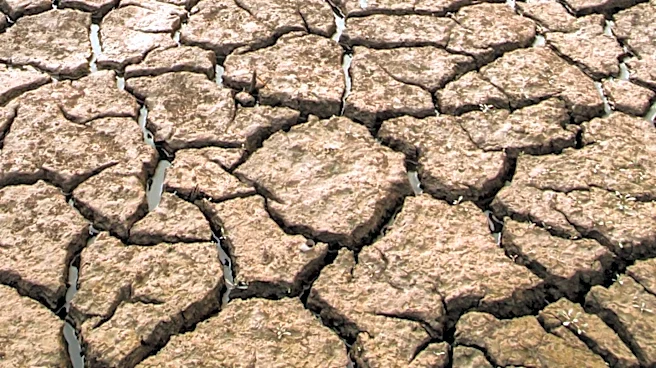
a natural phenomenon occurring in the tropical Pacific, leads to higher global temperatures, droughts, intense rains, and cyclones. The study, coauthored by Katherine Ricke from UC San Diego and the Scripps Institution of Oceanography, explores the use of marine cloud brightening (MCB) as a method to reflect solar energy and cool the ocean, potentially moderating El Niño events. MCB involves spraying seawater into clouds to increase their reflectivity. The study draws parallels from the 2019-2020 Australian bushfires, which released significant smoke into the atmosphere, mimicking MCB effects and triggering a rare triple-dip La Niña. The researchers modeled these effects against historical El Niño events, finding that reducing sunlight could significantly lessen their magnitude and global impact.
Why It's Important?
The study's findings are significant as they offer a potential method to address the severe economic and environmental impacts of El Niño, which can result in hundreds of billions in losses. By targeting regional events like El Niño, geoengineering could provide a more focused approach to climate intervention, potentially reducing the compounding effects of global warming. This approach could be crucial if efforts to curb fossil fuel emissions fall short. However, the concept of geoengineering remains controversial due to the complexities of sustaining such interventions and the potential for unintended consequences. The study suggests a shift in how geoengineering is perceived, advocating for its use in regional rather than global contexts.
What's Next?
Further research and experimentation are needed to validate the effectiveness and safety of marine cloud brightening as a geoengineering technique. The study highlights the need for more extensive trials to understand the potential impacts and feasibility of implementing such interventions on a larger scale. Policymakers and climate scientists may need to consider the ethical and geopolitical implications of geoengineering, as well as the challenges of international cooperation required for its deployment. The study opens the door for discussions on how to integrate geoengineering into broader climate strategies, especially in regions most vulnerable to El Niño's effects.
Beyond the Headlines
The exploration of geoengineering as a tool to combat climate change raises ethical and legal questions about human intervention in natural systems. The potential for regional geoengineering to alter weather patterns could have far-reaching implications for ecosystems and communities. There is also the risk of geopolitical tensions arising from unilateral actions by countries or regions. The study underscores the importance of developing robust governance frameworks to manage the deployment of geoengineering technologies, ensuring they are used responsibly and equitably.