







What's Happening?
The United States faces challenges in sustaining munitions production during prolonged conflicts, as highlighted by recent wars that depleted stockpiles quickly. Kevin Capozzoli, CEO of Critical Materials Group, is addressing this issue by developing
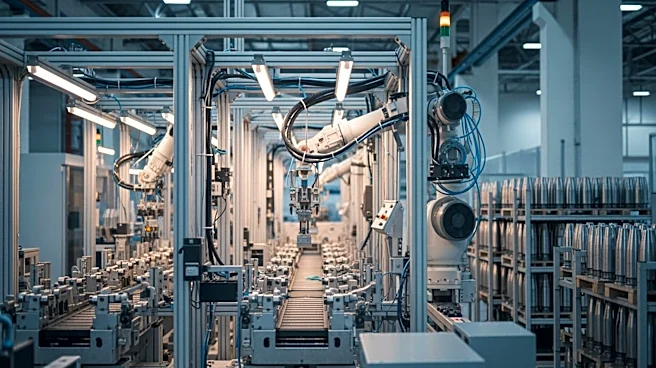
modular, continuous-flow manufacturing systems for energetic materials, which include explosives and propellants. These systems aim to replace large batch processes with smaller, automated production lines, improving safety and scalability. The Department of Defense has identified vulnerabilities in the supply chain, particularly in processing capacity, and is prioritizing automation and distributed manufacturing to reduce reliance on individual facilities. The initiative seeks to modernize the U.S. energetics infrastructure, much of which dates back to World War II, and enhance resilience across the industrial base.
Why It's Important?
The modernization of munitions production is crucial for national security, as it strengthens the U.S. ability to sustain military operations and deter adversaries. The current reliance on outdated infrastructure and limited processing capacity poses risks in future conflicts, where rapid mobilization may be necessary. By adopting modular manufacturing systems, the U.S. can improve production consistency and safety, while reducing single points of failure in the supply chain. This approach aligns with the Department of Defense's strategy to enhance resilience and reduce concentration risk. Failure to modernize could leave the U.S. vulnerable, with fragile supply chains and limited surge capacity, impacting its readiness for high-intensity conflicts.
What's Next?
The Department of Defense is expected to continue its focus on modernizing the munitions industrial base, with potential investments in automation and distributed manufacturing systems. Critical Materials Group's modular approach may serve as a model for other sectors within the defense industry, encouraging broader adoption of similar technologies. As the U.S. seeks to expand its production capacity, collaboration with industry partners and government agencies will be essential to address supply chain vulnerabilities and ensure readiness for future conflicts. The ongoing modernization efforts may also lead to policy changes and increased funding to support infrastructure upgrades and technological advancements.
Beyond the Headlines
The shift towards modular manufacturing systems in munitions production could have broader implications for other industries, such as pharmaceuticals and specialty chemicals, where similar technologies are already in use. This transition may drive innovation in manufacturing processes, leading to tighter control of reactions and improved safety standards. Additionally, the focus on reducing reliance on foreign suppliers, particularly for critical materials like TNT, may influence trade policies and encourage domestic production. The modernization of the energetics infrastructure could also impact workforce dynamics, with automation reducing the need for workers in hazardous environments, potentially reshaping employment patterns in the defense sector.