



What's Happening?
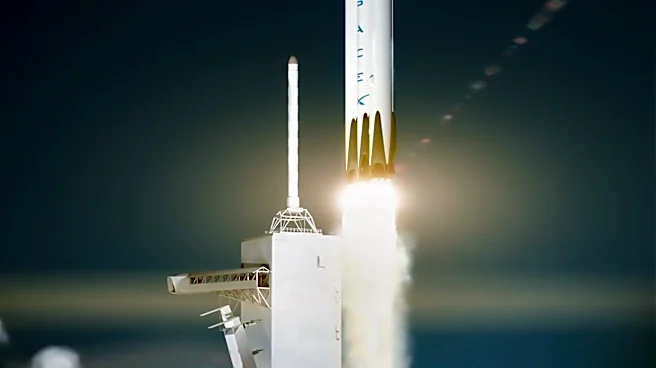
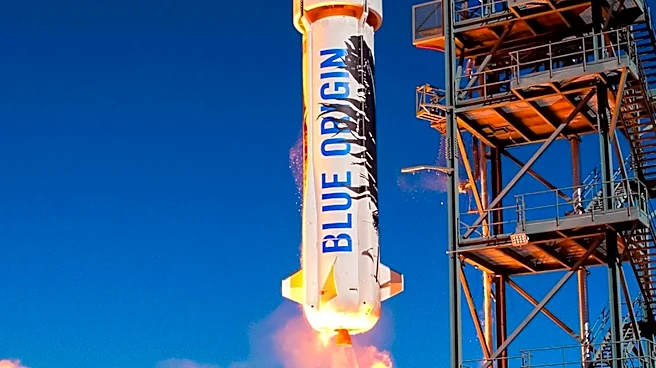
Blue Origin has announced the development of the GS3 third stage for its New Glenn heavy-lift launch vehicle. This new stage is designed to enhance the rocket's capabilities, allowing for direct deployment of satellite constellations into geostationary
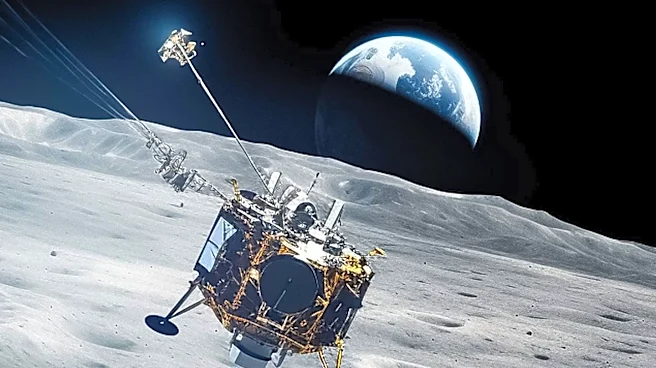
orbit and facilitating heavy scientific and research missions to the Moon and deep space, as reported by Space.com. The GS3 will be powered by a single BE-7 engine, which was originally developed by Blue Origin for its Blue Moon spacecraft. The Blue Moon lander has been selected by NASA as one of two private spacecraft for crewed lunar landings under the Artemis program, with SpaceX's Starship being the other. While Blue Moon missions themselves will not require the GS3, this third stage will support extended operations near the Moon by enabling the delivery of significant cargo mass directly onto a lunar transfer trajectory. This capability is expected to reduce flight time and conserve more propellant for orbital operations. An unnamed government customer has already reserved a mission utilizing the GS3 for cislunar space, with a launch scheduled for 2028.
Why It's Important?
The development of the GS3 third stage by Blue Origin signifies a substantial advancement in U.S. space launch capabilities, particularly for lunar and deep space exploration. By enabling direct deployment of heavy payloads to the Moon and beyond, the GS3 could significantly reduce mission complexities and costs, making ambitious scientific and commercial ventures more feasible. This enhancement positions Blue Origin as a stronger competitor in the burgeoning space economy, challenging established players and fostering innovation in rocket technology. The ability to deliver larger payloads more efficiently could accelerate research into lunar resources, support the establishment of lunar bases, and facilitate more complex scientific missions to other celestial bodies. Furthermore, the booking of a mission by a government customer underscores the strategic importance of this new capability for national space objectives, potentially impacting future U.S. leadership in space exploration and defense. The increased efficiency in propellant usage also translates to longer mission durations and greater operational flexibility, which are critical for sustained presence in cislunar space.
What's Next?
The immediate next step for Blue Origin involves the continued development and testing of the GS3 third stage and its BE-7 engine. With a government customer already slated for a 2028 mission to cislunar space, the company will be focused on meeting this timeline and demonstrating the stage's operational capabilities. This will likely involve a series of ground tests, followed by integration with the New Glenn rocket. The successful deployment of the GS3 could lead to increased demand from both government agencies and commercial entities for missions requiring heavy-lift capabilities to the Moon and deep space. Blue Origin is also working on a new first-stage engine, Northstar, which is designed to be lighter and more powerful than its predecessor, the BE-4. While no first flight date for Northstar has been announced, its development, alongside the GS3, indicates a broader strategy by Blue Origin to continually upgrade its launch vehicle offerings. Future developments will likely include further announcements regarding additional customers and specific mission profiles that will leverage the enhanced capabilities of the New Glenn rocket with its new third stage.
Beyond the Headlines
The introduction of the GS3 third stage by Blue Origin has broader implications for the future of space exploration and the commercial space industry. This development could intensify the competition among private space companies, driving further innovation in propulsion systems and launch vehicle design. The ability to conduct more complex and longer-duration missions near the Moon and in deep space opens new avenues for scientific discovery, potentially leading to breakthroughs in our understanding of the solar system's origins and the potential for extraterrestrial life. Ethically, as humanity expands its reach into space, the increased capability to transport heavy payloads raises questions about resource utilization, space debris, and the long-term sustainability of lunar and deep space environments. Legally, the growing number of private missions will necessitate clearer international frameworks for space governance, property rights, and environmental protection in extraterrestrial territories. Culturally, successful missions enabled by technologies like the GS3 could reignite public interest in space exploration, inspiring future generations in STEM fields and fostering a renewed sense of human endeavor beyond Earth.