


What's Happening?
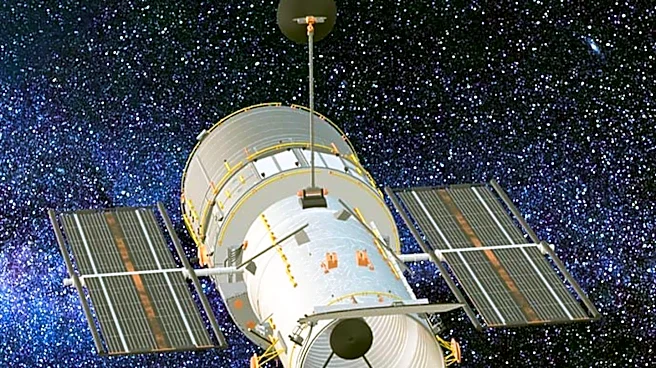
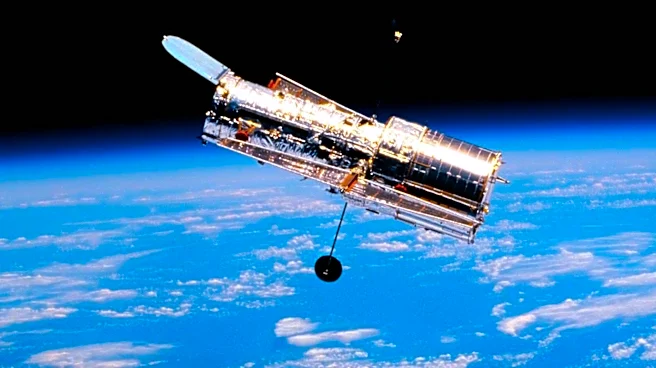
In 2019, a citizen science project called 'Hubble Asteroid Hunter' engaged 11,482 volunteers to help analyze 37,000 archival images from the Hubble Space Telescope. The primary goal was to identify asteroid trails that had inadvertently appeared in images originally
taken for other astronomical purposes. This collaborative effort, which combined human pattern recognition with artificial intelligence, led to the discovery of 1,701 asteroid trails. Of these, 1,031 were identified as previously unknown objects. According to a 2024 study published in Astronomy & Astrophysics by astronomer Pablo García Martín and his team, this initiative demonstrated the significant impact that citizen science can have on astronomical research. While the project successfully identified numerous new asteroids, the study noted that calculating their full orbits would be challenging due to the age of the images and the inability to re-observe these specific trails.
Why It's Important?
This project highlights the immense potential of citizen science in accelerating scientific discovery, particularly in fields with vast datasets like astronomy. By engaging thousands of volunteers, the 'Hubble Asteroid Hunter' project processed a volume of data that would have been impractical for professional astronomers alone, even with the aid of AI. This approach not only led to the discovery of over a thousand new asteroids but also demonstrated an effective model for combining human cognitive abilities with machine learning for complex data analysis. The identification of these previously unrecorded objects contributes to a more comprehensive understanding of our solar system's asteroid population, which is crucial for studying planetary formation, potential resource extraction, and planetary defense against impact threats. It also underscores the value of re-examining historical data with fresh perspectives and innovative methods.
What's Next?
The success of the 'Hubble Asteroid Hunter' project is likely to encourage more citizen science initiatives in astronomy and other scientific disciplines. NASA and other research institutions may continue to offer similar projects, leveraging public participation to analyze large datasets and make new discoveries. While calculating the full orbits of the newly identified asteroids from old Hubble images remains a challenge, the data collected can still inform future observation campaigns with newer telescopes. The methodology of combining citizen science with AI for data analysis could be further refined and applied to other areas of astronomical research, such as classifying galaxies or identifying exoplanet transits. This model could also inspire educational programs, fostering public engagement and interest in science.
Beyond the Headlines
The 'Hubble Asteroid Hunter' project transcends mere scientific discovery; it represents a powerful democratization of science. It demonstrates that significant contributions to cutting-edge research are not limited to professional scientists but can come from anyone with curiosity and access to a computer. This inclusive approach not only enriches scientific output but also builds a stronger connection between the scientific community and the public, fostering a greater appreciation for research and exploration. Ethically, it raises questions about data ownership and attribution in collaborative citizen science projects, though the 'Hubble Asteroid Hunter' appears to have navigated this successfully. Culturally, it reinforces the idea that major discoveries can emerge from unexpected places and through unconventional methods, challenging traditional notions of scientific expertise and participation.