



What's Happening?
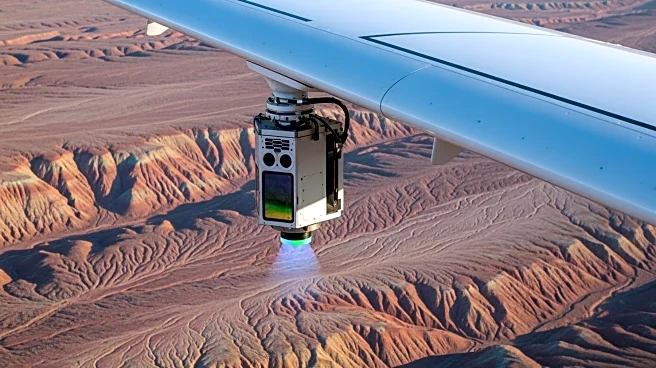
NASA, in collaboration with the U.S. Geological Survey (USGS), is employing a new high-tech sensor called AVIRIS-5 to search for critical minerals in the American West. Developed by NASA's Jet Propulsion Laboratory (JPL), AVIRIS-5 is an advanced version
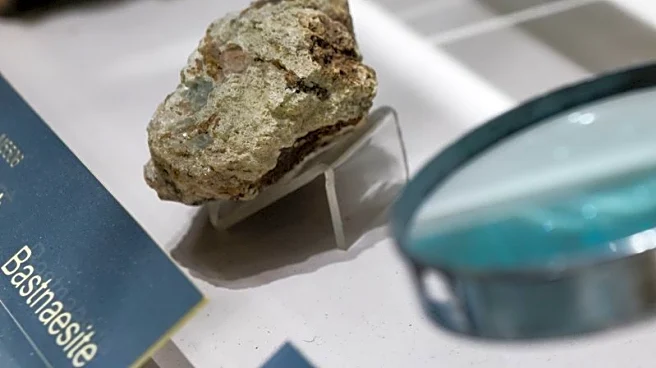
of a technology first introduced in the 1970s. This sensor is mounted on NASA's ER-2 high-altitude research aircraft and is part of the GEMx project, which aims to identify surface traces of minerals essential for manufacturing consumer electronics and military technology. Since 2023, the project has surveyed over 366,000 square miles in the region. The sensor detects unique chemical structures of minerals by analyzing the wavelengths of light they reflect, thus identifying their 'spectral fingerprints.' These minerals, including aluminum, lithium, and titanium, are crucial for technologies like semiconductors and electric vehicle batteries. The initiative follows a March 2025 Executive Order from the White House to maximize domestic mineral production due to national security concerns.
Why It's Important?
The search for critical minerals is vital for the U.S. economy and national security. These minerals are integral to the production of advanced technologies, including semiconductors, solar panels, and electric vehicle batteries. The reliance on foreign sources for these materials poses a risk, as highlighted by the White House's recent Executive Order. By identifying domestic sources of these minerals, the U.S. can reduce its dependency on potentially hostile foreign powers, thereby enhancing its economic and national security. The use of AVIRIS-5 in this endeavor not only aids in mineral discovery but also demonstrates the potential for advanced technology to address significant geopolitical and economic challenges.
What's Next?
The GEMx project will continue to explore the American West for critical minerals, with the potential for expanding its scope to other regions. The data collected by AVIRIS-5 could inform future mining operations and policy decisions aimed at bolstering domestic mineral production. Additionally, the technology's versatility suggests it could be applied to other areas, such as land management and environmental monitoring, further broadening its impact. Stakeholders, including government agencies and private sector companies, may respond by investing in infrastructure and technology to support domestic mineral extraction and processing.
Beyond the Headlines
The deployment of AVIRIS-5 highlights the intersection of technology and resource management, showcasing how advanced imaging techniques can contribute to sustainable development. The project also raises ethical considerations regarding land use and environmental impact, as increased mining activities could affect local ecosystems and communities. Balancing the need for critical minerals with environmental stewardship will be a key challenge moving forward. Furthermore, the initiative underscores the importance of innovation in addressing complex global issues, setting a precedent for future technological applications in resource exploration.