







What's Happening?
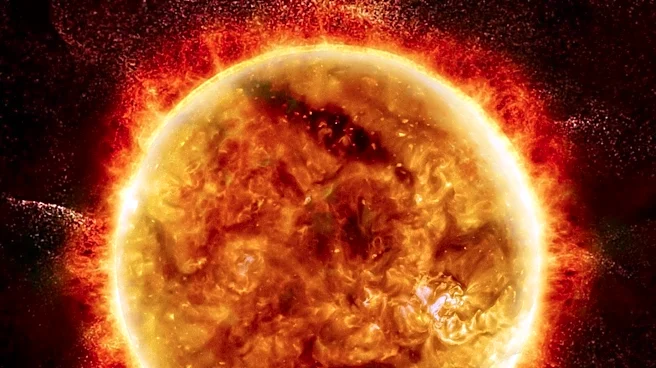
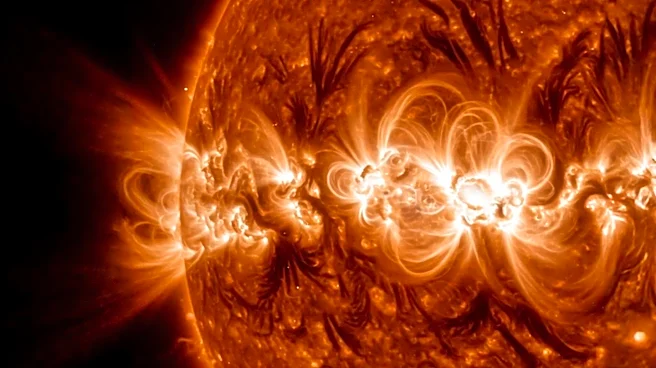
Coronal mass ejections (CMEs) are massive bursts of solar wind and magnetic fields rising above the solar corona or being released into space. These ejections can carry roughly a trillion kilograms of charged plasma and travel at speeds up to 3,000 kilometers
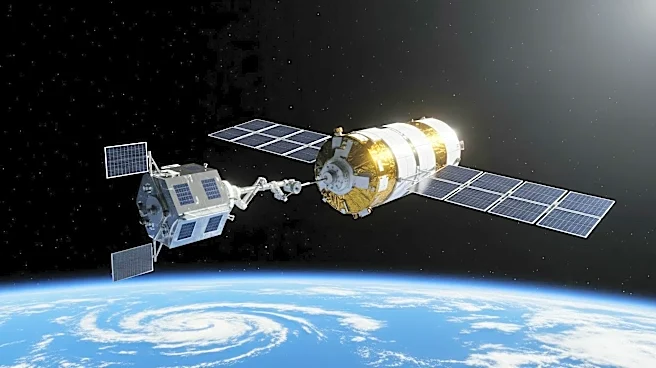
per second, potentially reaching Earth in under 18 hours. While most CMEs take days to reach Earth and are not directly aimed at the planet, the fastest ones can pose significant risks to satellites and power grids. Historical events, such as the 1989 Quebec blackout, highlight the potential for CMEs to disrupt electrical systems by inducing geomagnetically induced currents.
Why It's Important?
Understanding CMEs is crucial for mitigating their impact on modern technology. As society becomes increasingly reliant on electrical grids and satellite communications, the potential for disruption from solar storms grows. CMEs can cause geomagnetic storms that affect power transmission, satellite operations, and even aviation. By studying these solar phenomena, scientists aim to improve forecasting and develop strategies to protect critical infrastructure. The ability to predict and respond to CMEs can help prevent widespread outages and maintain the stability of technological systems.
What's Next?
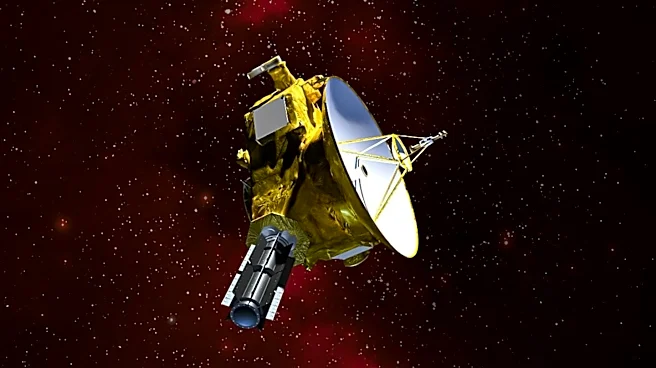
Ongoing research and monitoring of solar activity are essential for improving CME forecasts. Space agencies continue to deploy and utilize observatories like NASA's Parker Solar Probe and ESA's Solar Orbiter to study the Sun's behavior. These efforts aim to enhance our understanding of solar dynamics and improve early warning systems for geomagnetic storms. As solar activity continues through its cycle, scientists will focus on refining models to predict the occurrence and impact of CMEs, ensuring that society is better prepared for future solar events.