






What's Happening?
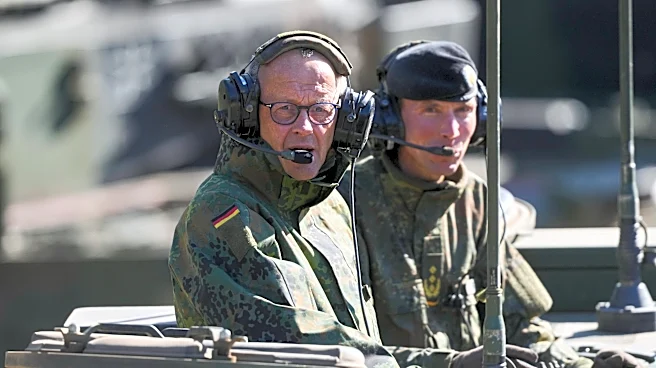
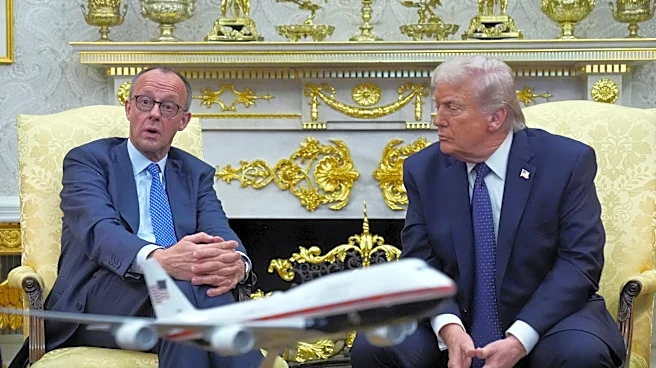
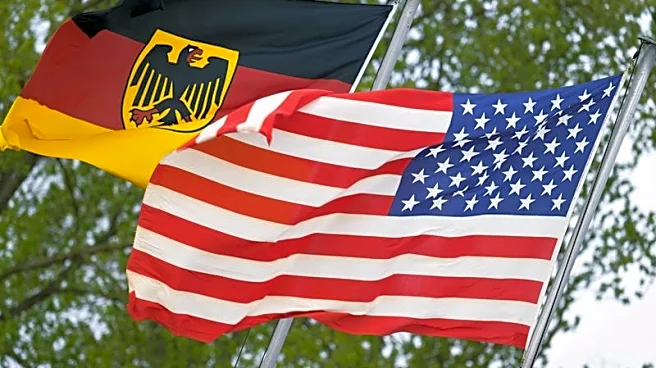
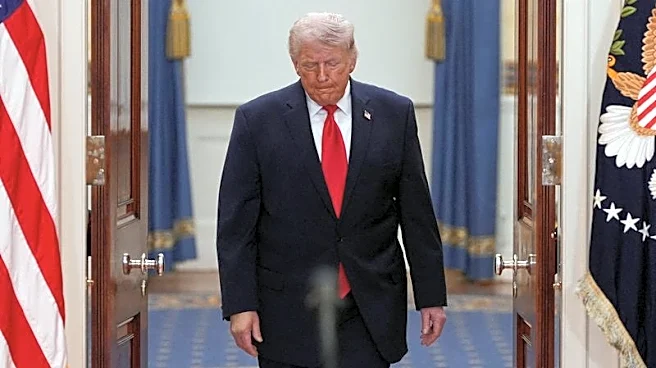
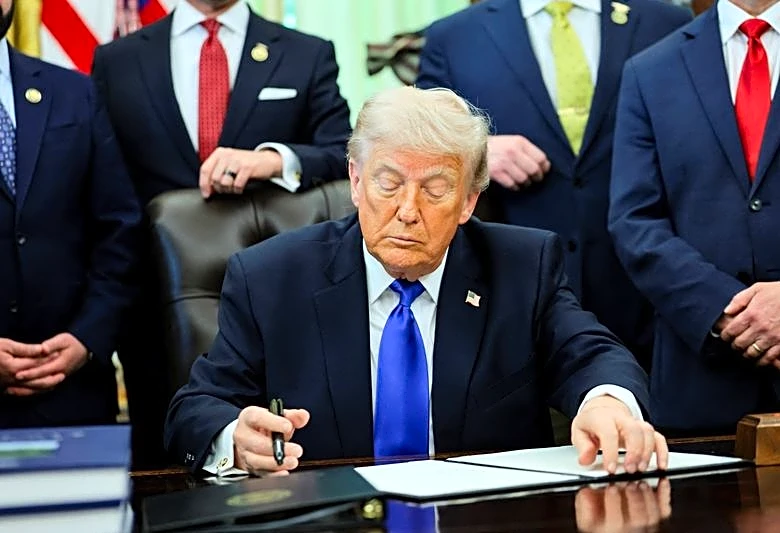
President Trump has announced that the U.S. is reviewing the possibility of reducing its military presence in Germany. This decision comes after German Chancellor Friedrich Merz criticized the U.S. for being outplayed by Iran. The U.S. military bases
in Germany have been a crucial part of NATO's defense strategy and a significant element in projecting U.S. power globally. Historically, the U.S. military presence in Germany dates back to World War II, with bases becoming permanent fixtures during the Cold War to counter the USSR. Currently, there are approximately 36,400 U.S. military personnel stationed in Germany across various bases, including major installations like Ramstein Airbase and the Stuttgart headquarters of European Command and Africa Command. These bases serve as vital logistical hubs for U.S. military operations worldwide.
Why It's Important?
The potential reduction of U.S. troops in Germany could have significant implications for NATO's defense posture and U.S. military operations in Europe and beyond. Germany hosts some of the largest U.S. military installations outside the United States, which are critical for operations in Europe, the Middle East, and Africa. A reduction in troops could weaken NATO's deterrence capabilities against potential adversaries and disrupt the logistical support for U.S. military actions. Additionally, this move could strain U.S.-Germany relations and impact broader transatlantic ties, especially if perceived as a unilateral decision without consulting NATO allies.
What's Next?
A decision on the U.S. military presence in Germany is expected soon, as President Trump has indicated a determination will be made in the near future. This decision could face opposition from the Pentagon, the State Department, and Congress, as well as from NATO allies who may view it as undermining collective security. If the reduction proceeds, it may involve redeploying troops to other European countries like Poland and Italy, or returning them to the U.S. The outcome will likely influence future U.S. military strategy and NATO's defense planning.