





What's Happening?
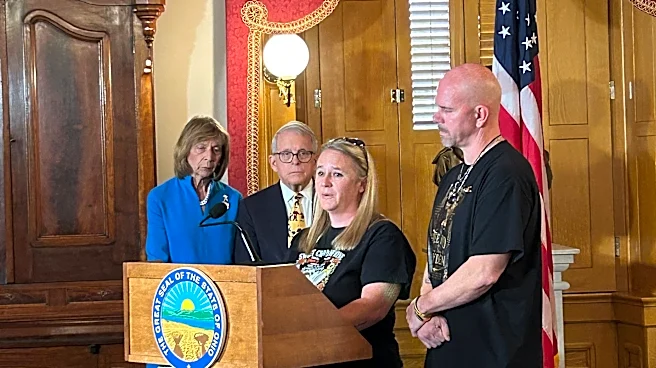
A recent campaign advertisement from Vivek Ramaswamy has been fact-checked for containing misleading information. The ad features an Ohio Republican activist who attributes her mother's isolation and death during the COVID-19 pandemic to Dr. Amy Acton,
Ohio's former health director. However, records indicate that the activist's mother resided and passed away in Kentucky, not Ohio. Furthermore, her death occurred weeks after Ohio's stay-at-home order had been lifted and six weeks after Dr. Acton had resigned from her position. The Columbus Dispatch and TiffinOhio.net were among the outlets that fact-checked the claims, highlighting the discrepancies between the ad's narrative and public records. Columbus City Attorney Zach Klein, who endorsed Dr. Acton, characterized the ad's claims as a 'complete fabrication.'
Why It's Important?
This incident is important as it highlights concerns about the accuracy and ethical standards of political advertising, particularly in the context of sensitive public health issues like the COVID-19 pandemic. Misleading advertisements can distort public perception, undermine trust in public health officials, and potentially influence voter decisions based on inaccurate information. The use of personal tragedies for political gain, especially when the facts are misrepresented, raises questions about the integrity of political campaigns. For Dr. Amy Acton, the ad represents a direct attack on her professional reputation, based on events that did not occur under her jurisdiction or during her tenure. For voters, it underscores the necessity of critically evaluating campaign messages and relying on verified information, particularly as election cycles intensify.
What's Next?
The fact-checking of Vivek Ramaswamy's campaign ad is likely to continue to generate discussion regarding the standards of truthfulness in political advertising. Opponents and media outlets may further scrutinize Ramaswamy's campaign for similar instances of alleged misrepresentation. This event could prompt increased calls for greater transparency and accountability in political messaging, potentially leading to more rigorous fact-checking efforts by media organizations and advocacy groups. The activist featured in the ad may face further public scrutiny regarding her claims. The broader implication is a continued debate on the role of personal narratives and emotional appeals in political campaigns, especially when they are found to be factually incorrect.
Beyond the Headlines
This situation delves into the ethical complexities of political communication, particularly the weaponization of personal grief and the spread of misinformation. The ad's attempt to link a death in Kentucky to an Ohio health official highlights a broader trend of using emotionally charged narratives to sway public opinion, even at the expense of factual accuracy. It also underscores the challenges faced by public figures, like Dr. Acton, who become targets of politically motivated attacks. The incident could contribute to a growing cynicism among the electorate regarding political campaigns, further eroding trust in institutions and the political process. The ease with which such claims can be disseminated through modern media platforms also raises questions about the responsibility of campaigns and platforms in verifying content.