


What's Happening?
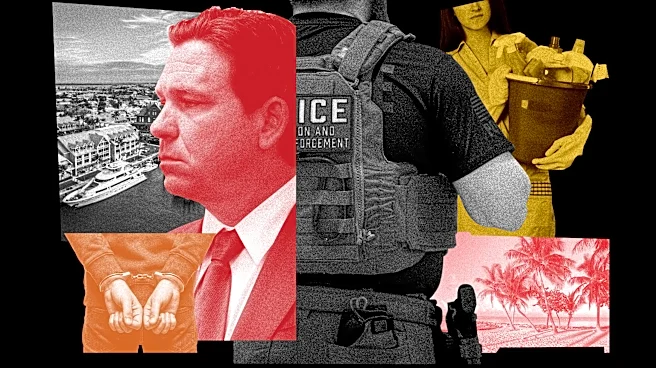
Democratic Congresswoman Debbie Wasserman Schultz has voiced deep concern regarding the recent surge in U.S. Immigration and Customs Enforcement (ICE) operations targeting Venezuelans, Haitians, and other law-abiding immigrants at airports and within
communities. According to EL PAÍS, Wasserman Schultz has contacted the Department of Homeland Security (DHS) to address these issues, including the increased ICE activity, but has not yet received a concrete response. Her office noted that multiple reports indicate a rise in ICE operations at airports, affecting various nationalities beyond Venezuelans. This comes amidst a broader wave of immigrant arrests in South Florida, which has particularly alarmed the Venezuelan community. Organizations like Venezuelans Persecuted for Political Reasons in Exile (Veppex) and Voice and Expression (Amavex) have submitted a report to Congress, calling for an investigation into the detentions of Venezuelans with pending asylum claims and other immigration cases, many of whom possess work permits and no criminal records.
Why It's Important?
The increased ICE activity and the concerns raised by Congresswoman Wasserman Schultz highlight a significant tension between immigration enforcement and the protection of individuals with pending legal statuses. This situation impacts thousands of immigrants, particularly those from Venezuela and Haiti, who may have valid work permits and asylum applications but are still subject to detention. The lack of response from DHS to congressional inquiries suggests potential challenges in oversight and accountability for immigration enforcement practices. For the affected communities, especially in South Florida, these actions create an environment of fear and uncertainty, potentially disrupting their lives and contributions to the local economy. The political implications are also notable, as immigrant communities and advocacy groups are pressuring lawmakers for concrete actions, particularly ahead of upcoming elections, indicating a potential shift in voter sentiment based on immigration policies.
What's Next?
Congresswoman Wasserman Schultz is actively exploring options to push for an investigation and stronger oversight into ICE's operations, despite not holding a senior congressional leadership position that would typically facilitate a Government Accountability Office (GAO) investigation. This suggests she may seek to collaborate with other members of Congress who do hold such positions. Advocacy groups like Veppex and Amavex will likely continue to pressure lawmakers, demanding oversight hearings and the publication of data on detainees' nationalities, criminal records, and immigration statuses. They are also calling for a GAO audit of airport arrests and for DHS and U.S. Citizenship and Immigration Services (USCIS) to review cases individually and consider alternatives to detention for those without criminal records. The response from DHS and other congressional leaders will be crucial in determining whether these calls for investigation and policy changes gain traction.
Beyond the Headlines
The current situation extends beyond immediate detentions, touching upon deeper ethical and legal questions regarding the treatment of asylum seekers and immigrants who are complying with legal processes. The detention of individuals with work permits and pending asylum claims, particularly those with no criminal record, raises concerns about due process and humanitarian considerations. It also highlights the complexities of U.S. immigration law and its enforcement, where individuals can find themselves in precarious situations despite following legal pathways. The political landscape in South Florida, where a significant Venezuelan population previously supported certain political figures, is also undergoing a re-evaluation as these communities feel their expectations for protection are not being met. This could lead to long-term shifts in political allegiances and increased activism within immigrant communities, demanding more effective representation and policy changes.