


What's Happening?
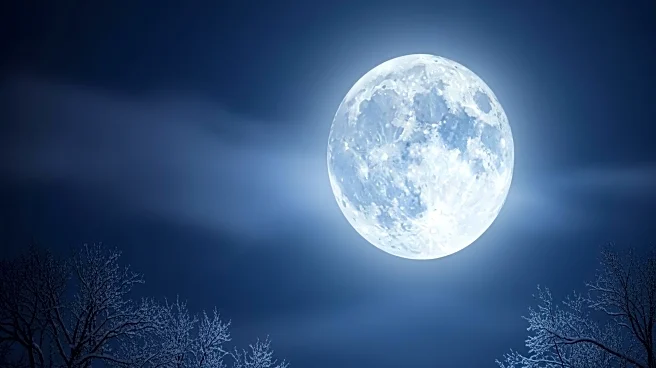
The Snow Moon of 2026 is set to reach its peak fullness on Sunday, February 1, providing a bright and steady lunar display. According to Space.com, the moon will officially reach its full phase at 5:09 p.m. EST, coinciding with its rise into the evening
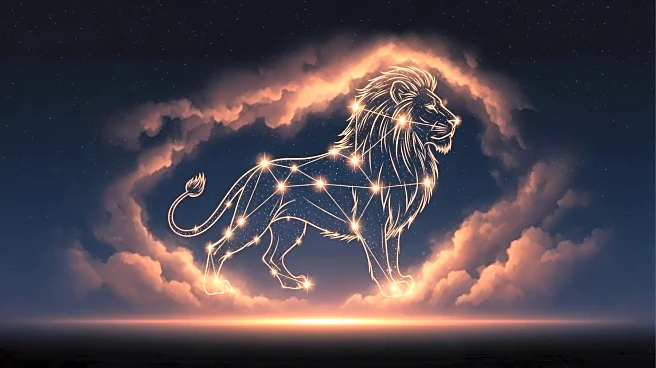
sky. This celestial event will be visible for about three days, from Friday night through Sunday night, allowing multiple opportunities for observation. The Snow Moon will be positioned in the constellation Cancer, near the bright star Regulus in Leo. Historically, the term 'Snow Moon' was used by Native American tribes and later adopted in European tradition to mark February, a month known for heavy snowfall. Other names for February's full moon include the Storm Moon, Ice Moon, and Bear Moon, reflecting seasonal changes and weather conditions.
Why It's Important?
The Snow Moon offers a unique opportunity for skywatchers and astronomy enthusiasts to observe a significant celestial event without the need for special equipment. This event not only provides a chance to appreciate the natural beauty of the night sky but also serves as a cultural touchstone, connecting modern observers with historical traditions. The Snow Moon's visibility over several days increases accessibility for those interested in astronomy, fostering a greater appreciation for celestial phenomena. Additionally, local events, such as the Snow Moon Winter Celebration in Newbury, Massachusetts, highlight the cultural significance and community engagement surrounding this event.
What's Next?
As the Snow Moon approaches, communities and individuals are preparing to engage with this celestial event. Local celebrations, like the one in Newbury, Massachusetts, are set to honor the traditions and folklore associated with the Snow Moon. For individuals, the best approach is to step outside after sunset, allow their eyes to adjust, and enjoy the spectacle. The event's timing and visibility make it an ideal opportunity for educational outreach and public engagement in astronomy. Observers are encouraged to use binoculars to enhance their viewing experience, although they are not necessary to enjoy the event.