





What's Happening?
Wyoming Representative Harriet Hageman has issued a warning regarding the potential impact of Colorado River water shortages on California's San Joaquin Valley agriculture and, consequently, the nation's food supply. This concern arose after the U.S.
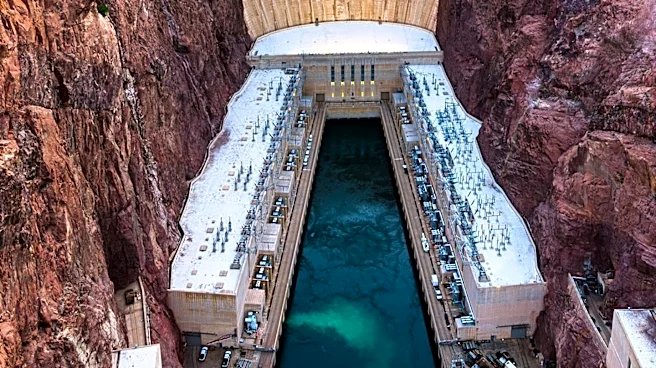
Department of the Interior mandated water cuts for California, Arizona, and Nevada. Although Wyoming, an upper-basin state, is not required to make cuts, Hageman, a Republican, criticized California Governor Gavin Newsom for what she described as a lack of success in developing new water storage infrastructure. The Colorado River system, including Lake Powell and Lake Mead, is experiencing historically low water levels due to years of poor Rocky Mountain snowpack. While the San Joaquin Valley does not directly receive Colorado River water, the interconnectedness of Western water systems means that cuts in Southern California could lead to increased demand for water from the Sacramento-San Joaquin Delta, potentially impacting Valley farmers who rely on the Central Valley Project.
Why It's Important?
The potential for Colorado River water shortages to affect California's agricultural output carries significant implications for the U.S. food supply and economy. California's San Joaquin Valley is a major agricultural region, producing a substantial portion of the nation's fruits, vegetables, and nuts. Any disruption to its water supply could lead to reduced crop yields, increased food prices, and economic hardship for farmers and related industries. The situation highlights the critical need for robust water management strategies and infrastructure development in the Western United States. The political dimension, with Rep. Hageman's criticism of Governor Newsom, underscores the ongoing inter-state and intra-state tensions over water rights and resource allocation, particularly in the face of climate change and prolonged drought conditions. The debate also brings to the forefront the long-standing issue of senior water rights in the American West, where historical claims often dictate who bears the brunt of water reductions.
What's Next?
The immediate future will likely involve California, Arizona, and Nevada implementing the mandated water cuts from the Colorado River. Southern California cities, particularly those served by the Metropolitan Water Agency, are expected to shoulder these reductions. This could lead to increased pressure on the State Water Project and the Sacramento-San Joaquin Delta as Southern California seeks alternative water sources. The political discourse surrounding water management and infrastructure development is also expected to continue, with figures like Rep. Hageman likely to maintain their calls for greater investment in water storage. Farmers in the San Joaquin Valley will be closely monitoring these developments, as any shift in water allocation from the Delta could directly impact their operations. The long-term outlook will depend on future snowpack levels in the Rocky Mountains and the effectiveness of ongoing negotiations and policy decisions regarding Colorado River management.
Beyond the Headlines
The Colorado River crisis and its potential impact on California agriculture reveal deeper issues concerning resource scarcity, regional interdependence, and the long-term effects of climate change on vital sectors. The interconnectedness of Western water systems means that decisions made in one state can have ripple effects across the entire region, highlighting the need for collaborative, rather than adversarial, approaches to water management. The political rhetoric surrounding the issue also points to the challenges of balancing agricultural needs with urban demands, especially in a state as populous and agriculturally significant as California. Furthermore, the situation underscores the vulnerability of the national food supply to regional environmental challenges and the importance of sustainable water practices and infrastructure resilience in ensuring food security for the entire country. The debate also touches upon the ethical considerations of water allocation, particularly when balancing economic interests with environmental preservation and the needs of diverse communities.