








What's Happening?
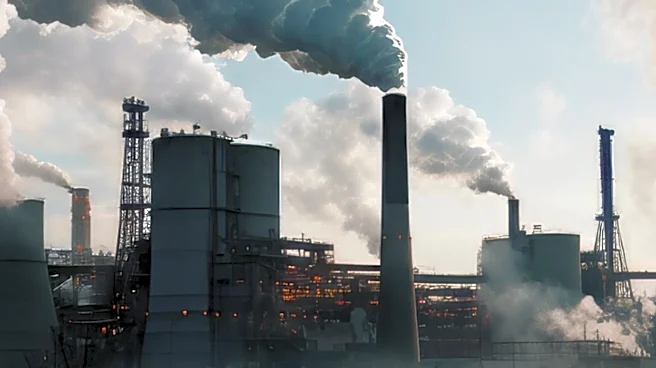
The COP30 climate summit held in Brazil encountered significant challenges in establishing a roadmap for transitioning away from fossil fuels. This difficulty arose primarily due to opposition from countries that produce fossil fuels. As a result, a separate
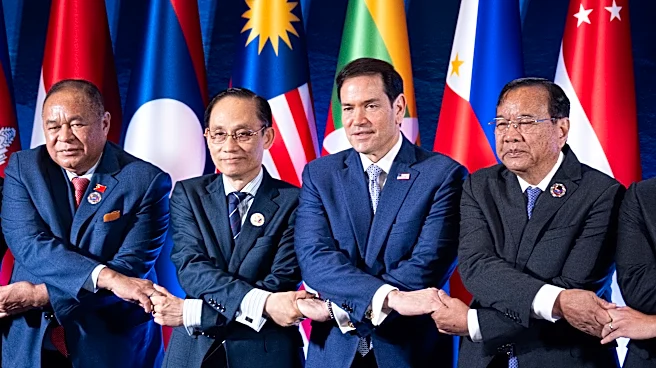
conference was organized in Santa Marta, Colombia, to address the transition away from fossil fuels. This conference was attended by negotiators from 57 countries, representing about 30% of global GDP, including major economies like the EU's top four, Nigeria, Australia, Brazil, and the UK. Notably, the conference was free from the usual presence of fossil fuel lobbyists. The summit resulted in the agreement on three workstreams aimed at advancing the green transition. The next COP31 conference is scheduled to take place in Antalya, Türkiye, from November 9th to 20th, amidst ongoing geopolitical tensions and fossil fuel interests.
Why It's Important?
The challenges faced at the COP30 summit highlight the ongoing struggle to achieve consensus on climate action, particularly in transitioning away from fossil fuels. The opposition from fossil-fuel-producing countries underscores the geopolitical and economic complexities involved in global climate negotiations. The separate conference in Santa Marta represents a significant step towards forming a coalition of countries committed to advancing the green transition. This coalition's efforts to decarbonize cross-border trade and reform financial systems could have substantial implications for global climate policy. The absence of fossil fuel lobbyists at the Santa Marta conference suggests a shift towards more focused and potentially effective climate discussions. However, the exclusion of major players like China from these discussions indicates the limitations of this approach in addressing global climate challenges comprehensively.
What's Next?
As the global climate community prepares for COP31 in Antalya, the outcomes of the Santa Marta conference may influence future negotiations. The coalition formed in Santa Marta aims to present new national and regional plans to phase out fossil fuels, decarbonize trade, and reform financial systems. These initiatives could serve as a model for other countries and potentially influence the agenda at COP31. However, the success of these efforts will depend on the ability to engage a broader range of stakeholders, including major fossil fuel producers and emitters. The upcoming COP31 conference will be a critical test of whether these new approaches can be integrated into the formal UN climate negotiation process and lead to meaningful progress in the global fight against climate change.
Beyond the Headlines
The developments at COP30 and the Santa Marta conference reflect a broader shift in global climate diplomacy towards more pragmatic and issue-specific coalitions. This approach challenges traditional multilateral frameworks and highlights the need for innovative governance models to address complex global issues like climate change. The exclusion of China from the Santa Marta conference raises questions about the inclusivity and effectiveness of these new coalitions. While they offer a promising pathway for advancing climate action, they also underscore the need for comprehensive multilateral diplomacy to mobilize a wide range of countries and stakeholders. The success of these efforts will depend on balancing the interests of diverse actors and overcoming entrenched geopolitical and economic barriers.