



What's Happening?
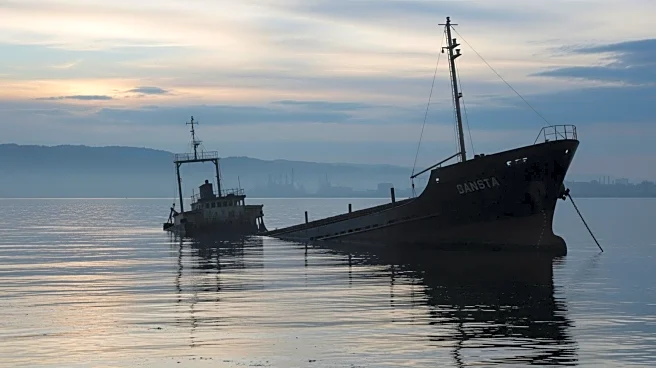
A derelict freighter named Fusion has partially sunk at its anchorage in Puerto Montt, Chile, posing a potential environmental threat due to possible diesel pollution. The vessel, which has been moored in the area since early 2022, was found partially submerged
after taking on a list during an unusually high tide. The ship is located less than 100 feet from the shore, prompting the deployment of containment booms to prevent a diesel slick from spreading. A specialized pollution control team has been dispatched to manage the situation, and the local maritime prosecutor has initiated an investigation into the incident. The freighter, 48 years old, has a history of serving under various flags and has not been subject to port state control since 2015.
Why It's Important?
The sinking of the freighter Fusion highlights the environmental risks associated with aging vessels, particularly in ecologically sensitive areas. The potential diesel spill poses a threat to the pristine waters of Puerto Montt, which could have significant ecological and economic impacts. The incident underscores the importance of stringent maritime regulations and oversight to prevent such occurrences. The investigation by the maritime prosecutor may lead to increased scrutiny of similar vessels, potentially influencing future maritime policies and practices. The situation also raises awareness about the need for effective pollution response strategies to mitigate environmental damage.
What's Next?
The ongoing investigation by the maritime prosecutor will seek to determine the cause of the freighter's sinking and assess any regulatory failures. Depending on the findings, there could be legal and regulatory repercussions for the vessel's owners and operators. The incident may prompt a review of maritime safety and environmental protection standards, particularly for older vessels. Additionally, the response to the potential diesel spill will be closely monitored to evaluate the effectiveness of current pollution control measures. Stakeholders, including environmental groups and local authorities, may advocate for stricter regulations to prevent similar incidents in the future.