



What's Happening?
European drug regulators have endorsed a new treatment for sleeping sickness, a disease prevalent in sub-Saharan Africa. The European Medicines Agency has approved acoziborole, a drug developed by Sanofi, which simplifies the treatment process significantly.
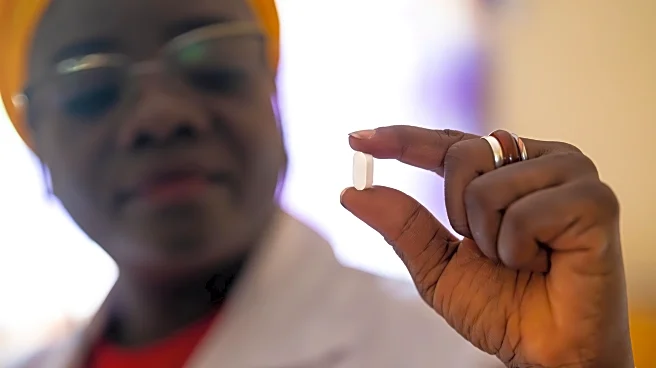
Unlike current treatments that require lengthy hospital visits and spinal taps, acoziborole is administered as a one-time dose of three pills. This development is seen as a major step towards eliminating sleeping sickness, particularly in the Democratic Republic of Congo, which has the highest number of cases. The disease, transmitted by tsetse flies, causes severe symptoms including a disrupted sleep cycle, and can lead to coma and death if untreated. The World Health Organization aims to stop the spread of sleeping sickness by 2030.
Why It's Important?
The approval of acoziborole represents a significant advancement in the fight against sleeping sickness, a disease that predominantly affects impoverished regions with limited access to healthcare. By simplifying the treatment regimen, the drug could drastically reduce the logistical and financial burdens on patients and healthcare systems in affected areas. This could lead to a substantial decrease in the number of cases and potentially eradicate the disease without the need for a vaccine. The drug's approval also highlights the importance of international collaboration in addressing neglected tropical diseases, which often receive less attention and funding compared to other global health issues.
What's Next?
Sanofi has committed to donating doses of acoziborole to the World Health Organization, ensuring that the drug is available free of charge to patients in need. The focus will now shift to the distribution and administration of the drug in remote areas, which may require additional logistical support and infrastructure development. Researchers and health organizations will continue to monitor the effectiveness of the drug in real-world settings and assess its impact on the prevalence of sleeping sickness. Further studies may be needed to address any remaining questions about the disease's transmission and the long-term efficacy of the treatment.