
What's Happening?
The family of Ran Gvili, who has been held captive in Gaza for 833 days, gathered for a vigil in Hostages Square, calling for his return. The event was attended by families of other hostages, community
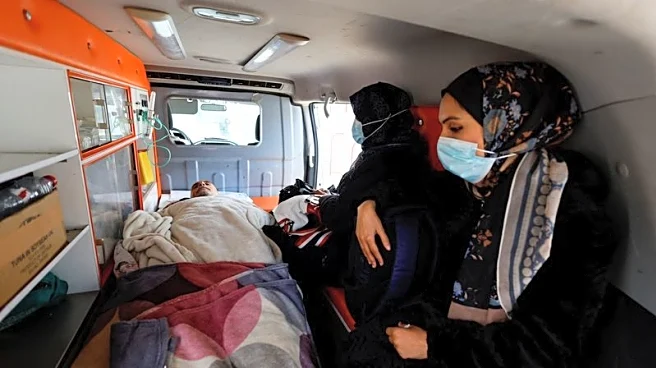
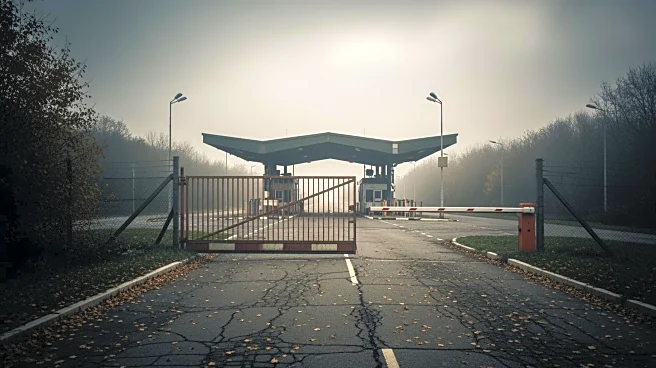
members, and supporters. Ran Gvili's father, Itzik Gvili, spoke about his son's character and the family's hope for his return. Despite recent efforts by Hamas and the Red Cross to locate Gvili, no remains have been found, and searches have been halted. The situation is complicated by ongoing negotiations in Cairo, where discussions have focused on establishing governance in Gaza rather than addressing disarmament or the return of captives. Hamas has stated that opening the Rafah crossing and advancing to the next phase of the agreement are priorities, given their impact on Gaza's humanitarian and economic conditions.
Why It's Important?
The prolonged captivity of Ran Gvili highlights the human cost of the ongoing conflict in Gaza and the challenges in securing the release of captives. The situation underscores the complexities of negotiating peace and humanitarian agreements in conflict zones, where multiple parties have competing priorities. The focus on governance and economic conditions in Gaza reflects broader regional dynamics, with implications for humanitarian aid and political stability. The involvement of international actors, such as the Red Cross, indicates the global interest in resolving such humanitarian issues. The family's vigil serves as a poignant reminder of the personal and communal impact of the conflict, emphasizing the need for continued advocacy and diplomatic efforts to secure the release of captives.
What's Next?
Future developments may include renewed efforts to locate and secure the release of Ran Gvili, potentially involving international diplomatic interventions. The ongoing negotiations in Cairo could lead to changes in the governance and humanitarian landscape in Gaza, influencing the conditions for captives. The opening of the Rafah crossing and the advancement of the agreement's next phase may also impact the humanitarian situation and the prospects for peace. Stakeholders, including the Israeli government, Hamas, and international organizations, will likely continue to engage in dialogue to address these complex issues. The situation remains dynamic, with potential shifts depending on the outcomes of ongoing negotiations and international pressure.