



What's Happening?
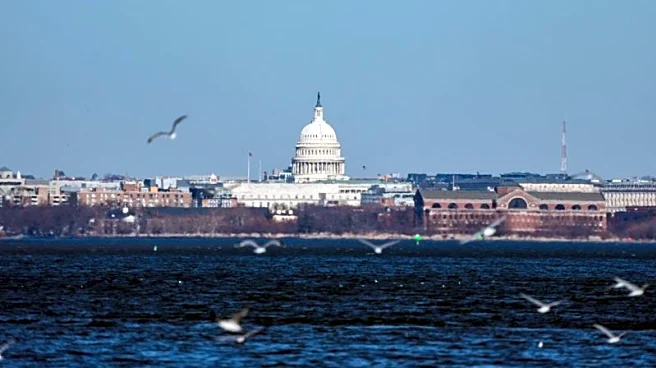
The National Transportation Safety Board (NTSB) has released its final report on the January 2025 midair collision over the Potomac River, which involved an Army Black Hawk helicopter and an American Airlines regional jet, resulting in 67 fatalities.
The report highlights several critical failures, including the design of helicopter routes, the lack of use of available tracking technology, and deficiencies in the Federal Aviation Administration's (FAA) safety systems. The NTSB found that conflicting flight paths over the Potomac River were a primary cause of the crash. Additionally, the report criticized the military for not utilizing the ADS-B out tracking capability, which could have prevented the collision. The FAA was also faulted for not acting on prior warnings about safety risks in the airspace around Ronald Reagan Washington National Airport.
Why It's Important?
The findings of the NTSB report underscore significant safety concerns in U.S. airspace management, particularly around busy airports like Ronald Reagan Washington National Airport. The report's recommendations could lead to substantial changes in how helicopter routes are designed and managed, potentially improving safety for both military and civilian flights. The criticism of the FAA's safety management practices highlights a need for reform within the agency to prevent future incidents. The Senate has already passed legislation requiring a review of the FAA's safety management system, which could lead to policy changes aimed at mitigating risks and enhancing air traffic safety. This incident and its aftermath could influence future regulatory measures and technological implementations in aviation safety.
What's Next?
Following the NTSB report, there may be increased pressure on the FAA and other relevant agencies to implement the recommended changes. The Senate has passed a bill to close ADS-B-related loopholes, but it awaits consideration by the House of Representatives. If enacted, this legislation would require most flights around Washington, DC, to broadcast their locations, potentially preventing similar incidents. The FAA may also face scrutiny and calls for accountability from lawmakers and the public, leading to possible organizational and procedural reforms. The aviation industry and military may need to collaborate more closely to ensure the safe integration of military and civilian air traffic.