



What's Happening?
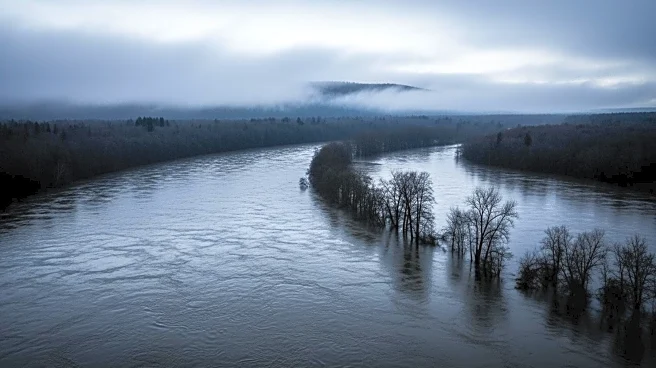
In December 2025, the Pacific Northwest experienced severe flooding due to a powerful atmospheric river system. NASA's GEOS-FP data illustrated the event, showing how moisture from the Pacific Ocean was channeled inland, resulting in up to 10 inches of
rain in some areas. The flooding affected Washington, Oregon, British Columbia, and Montana, with over 100,000 people evacuated in Washington alone. States of emergency were declared in both Washington and British Columbia as the extreme precipitation broke multiple records and caused widespread damage.
Why It's Important?
The December 2025 flooding in the Pacific Northwest underscores the increasing frequency and intensity of extreme weather events, likely exacerbated by climate change. The event highlights the need for improved infrastructure resilience and emergency preparedness to mitigate the impact of such disasters. The economic and social costs of the flooding, including displacement and property damage, emphasize the importance of investing in climate adaptation strategies. Understanding the dynamics of atmospheric rivers and their potential to cause catastrophic flooding is crucial for developing effective response plans and reducing future risks.
What's Next?
In the aftermath of the flooding, authorities in the affected regions are likely to focus on recovery efforts and assessing the damage. Long-term strategies may include enhancing flood defenses, updating building codes, and improving early warning systems. Policymakers may also prioritize climate change mitigation and adaptation measures to address the root causes of extreme weather events. Continued research into atmospheric river systems will be essential for refining predictive models and informing policy decisions.