






What's Happening?
ACMI Federal has been awarded $50 million by the Naval Surface Warfare Center Indian Head Division (NSWC IHD) to establish a Maryland Energetics Innovation Hub (MEIH). This initiative aims to create a collaborative research and development ecosystem to enhance
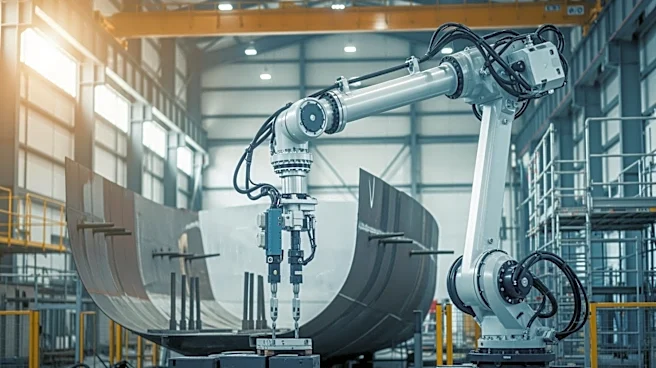
energetics capabilities. The MEIH will facilitate cooperation between industry, academia, and government stakeholders to address challenges in the munitions industrial base, improve production efficiency, and accelerate innovation in energetic material systems. The hub will focus on eight technical areas, including high-performance computing for manufacturing, advanced synthesis methods for energetics, and automated processing with integrated AI. The project is part of ACMI's broader strategy to expand U.S. manufacturing capacity and strengthen the defense industrial base.
Why It's Important?
The establishment of the Maryland Energetics Innovation Hub is significant for the U.S. defense sector as it aims to enhance the country's energetics capabilities, which are crucial for national security. By fostering collaboration between various stakeholders, the initiative is expected to accelerate the development and deployment of advanced munitions technologies. This could lead to more efficient production processes and higher-performing products for the military, thereby strengthening the U.S. defense arsenal. Additionally, the project is likely to create high-quality jobs and attract significant investment to Maryland, contributing to economic growth and resilience in the region.
What's Next?
The Maryland Energetics Innovation Hub is scheduled to break ground in the second quarter of 2026. As the project progresses, it is expected to attract tenants specializing in the identified technical focus areas, further expanding the munitions industrial base. The initiative is anticipated to drive economic growth and innovation, with additional details on project timelines and tenant recruitment forthcoming. The collaboration between ACMI and NSWC IHD is likely to set a precedent for similar partnerships across the country, potentially leading to further advancements in the U.S. defense sector.