




What's Happening?
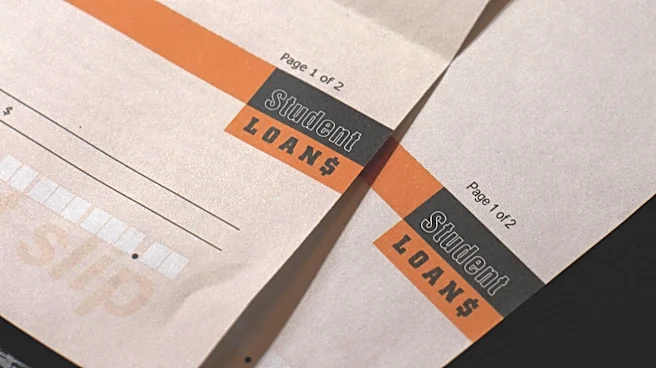
Millions of student loan borrowers are facing severe collection measures, including wage garnishment and seizure of tax refunds, as more than 9 million borrowers are currently in default, owing a collective $234 billion. This crisis follows the expiration
of pandemic forbearance, which allowed borrowers to pause payments without penalty. Betsy Mayotte, president and founder of The Institute of Student Loan Advisors, anticipates collections will begin next year, catching many off guard. The government's communication regarding the resumption of payments was criticized for being unclear, with many 'false starts' that led borrowers to believe pauses would continue. States like Maryland have a significant number of borrowers in default, with 179,000 Marylanders owing nearly $5 billion.
Why It's Important?
The impending collection measures for millions of defaulted student loans pose a significant threat to the financial stability of numerous American households. Wage garnishment and tax refund seizures can severely impact individuals' ability to meet basic living expenses, potentially leading to further economic hardship. This situation highlights a critical failure in communication from the government regarding the end of forbearance, leaving many borrowers unprepared for the resumption of payments. The high default rates, particularly among older borrowers and those from certain vocational schools, underscore systemic issues within the student loan system and the broader economy. The economic impact could be substantial, as reduced disposable income for millions could dampen consumer spending and overall economic activity.
What's Next?
As collections are expected to begin next year, borrowers in default should prepare for potential wage garnishment and tax refund seizures. The U.S. Department of Education has not yet provided clear guidance on collection plans, but the Washington Sun reported that announcements were likely after the midterm elections. States like Maine are actively offering student loan counseling and tax credits to help residents manage their debt, suggesting a potential model for other states. However, without a comprehensive federal strategy, millions will continue to face severe financial consequences. Advocacy groups and non-profits like The Institute of Student Loan Advisors will likely play a crucial role in advising borrowers on their options and rights as collection efforts intensify.
Beyond the Headlines
The student loan default crisis extends beyond immediate financial hardship, revealing deeper societal and ethical concerns. The narrative of individuals like Timothy Varro, whose $120,000 loan ballooned to $375,000 despite consistent payments, illustrates the crushing burden of interest and the difficulty of escaping debt cycles. This situation raises questions about the predatory nature of some lending practices and the accessibility of affordable education. The disproportionate default rates in certain vocational schools also highlight the need for greater accountability in educational institutions. The emotional toll on borrowers, as described by Betsy Mayotte, underscores the human cost of this financial crisis, potentially leading to increased mental health issues and reduced social mobility. This crisis challenges the American ideal of education as a pathway to upward mobility, suggesting that for many, it has become a trap.