



What's Happening?
The Community College of Rhode Island (CCRI) and the Office of Energy Resources (OER) have announced the development and launch of a new HVAC/R and Heat Pump Workforce Training program, scheduled to begin in the summer/fall of 2027. CCRI has secured $200,000
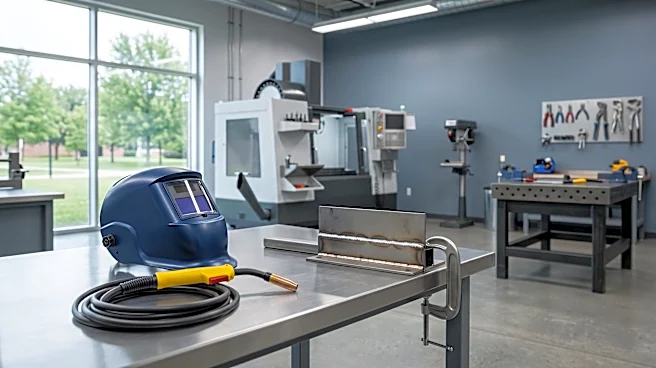
from OER to fund this initiative, which aims to build a skilled workforce to support the state’s building electrification and heat pump efforts. The funding will be used to establish a hands-on instructional environment at the Lincoln Campus lab, equipped with field-installable ducted and ductless heat pump systems, modern diagnostic instrumentation, and electrical learning systems. Additionally, the program will develop a comprehensive new-hire HVAC/R curriculum, serving as a pre-apprenticeship pathway with a focus on refrigeration principles, brazing and piping, and cold-climate applications. For existing HVAC/R professionals, CCRI will also create a 40-hour Heat Pump Installation, Commissioning, Service and Maintenance program, set to launch by September 2027. Governor Dan McKee emphasized the importance of providing educational training opportunities in the energy sector, calling it a smart long-term investment.
Why It's Important?
This new HVAC and heat pump training program is crucial for Rhode Island's efforts to meet its climate goals and transition towards cleaner energy. By developing a skilled workforce capable of installing and maintaining eco-friendly heating systems, the state addresses a critical need in its clean energy economy. The investment will create pathways for students and current professionals into a growing employment sector, offering high-paying, in-demand careers. This initiative will help close workforce gaps, ensuring that new, energy-efficient heating systems are installed correctly and built to last, which is vital for reducing reliance on fossil fuels. The program's focus on practical, hands-on experience with modern equipment will prepare individuals for real-world challenges, contributing to a more robust and sustainable energy infrastructure in Rhode Island. The collaboration between CCRI and OER highlights a strategic approach to workforce development that aligns with broader environmental and economic objectives.
What's Next?
The new HVAC/R and Heat Pump Workforce Training program is slated to launch in the summer/fall of 2027. CCRI will continue to develop the comprehensive new-hire curriculum and establish the hands-on instructional environment at its Lincoln Campus lab. The 40-hour Heat Pump Installation, Commissioning, Service and Maintenance program for existing professionals is expected to launch by September 2027. OER will continue its heat pump program investments, which have already supported over 5,000 installations. The success of this program will be measured by its ability to produce a steady stream of skilled workers, contributing to the state's Act on Climate objectives and the ongoing expansion of the heat pump sector in Rhode Island and the wider region. Future developments will likely include monitoring the program's effectiveness in meeting workforce demands and its impact on the state's clean energy transition.
Beyond the Headlines
Beyond the immediate goal of workforce development, this initiative signifies a broader commitment to environmental sustainability and economic resilience in Rhode Island. The program's emphasis on cold-climate applications for heat pumps addresses a specific regional need, making the technology more viable and effective in the Northeast. This investment also reflects a proactive approach to adapting to climate change by fostering a green economy and creating jobs in emerging sectors. The partnership between an educational institution and a state energy office serves as a model for other states looking to build capacity in their clean energy workforces. Furthermore, by providing pre-apprenticeship pathways, the program aims to make these career opportunities accessible to a wider range of individuals, promoting economic equity and social mobility within the state. The long-term impact could include reduced energy costs for residents, improved air quality, and a more stable energy supply.