




What's Happening?
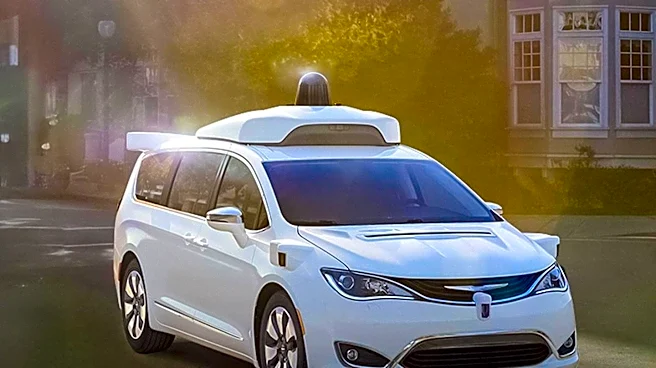
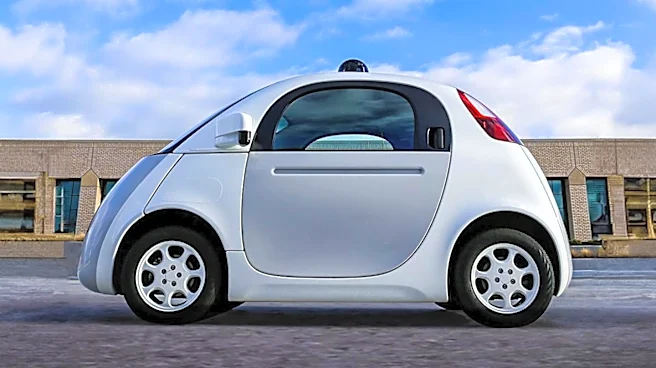
A Waymo robotaxi nearly struck a two-year-old child who fell in a crosswalk in San Francisco's Noe Valley. Ben Fisher, the child's father, reported that his daughter tripped and fell face-down in the crosswalk at Sanchez and Duncan streets. As she lay
there, a Waymo autonomous vehicle began moving into the intersection. Fisher quickly pushed his daughter's empty stroller into the robotaxi's path, causing it to stop approximately 13 feet away. Waymo stated that the vehicle 'did nothing wrong' and had already stopped before Fisher's intervention. Fisher and his wife filed a police report, an incident report with Waymo, and a complaint through the city's 311 system. A passenger in the Waymo also reported the incident to the company. Fisher contacted the offices of Mayor Daniel Lurie and Supervisor Rafael Mandelman regarding the event. The incident occurred on a designated 'Slow Street' intended to prioritize pedestrians and cyclists.
Why It's Important?
This incident highlights critical questions regarding the safety and liability of autonomous vehicles, particularly in urban environments with vulnerable road users like children. While Waymo claims its system functioned as designed, the father's perception of imminent danger underscores a potential gap between technological operation and human expectation. The event brings into focus the legal standards applied to self-driving cars, especially whether they should be held to a higher standard than human drivers given their advertised capabilities of 360-degree perception and rapid reaction times. The collection and preservation of telemetry and sensor data from autonomous vehicles are crucial for accident investigations, as this data can provide definitive evidence of what transpired. The case also touches upon California's 'sudden emergency doctrine' and the ongoing duty of drivers, including autonomous ones, to exercise due care for pedestrians in crosswalks, regardless of pedestrian conduct.
What's Next?
The various reports filed by Ben Fisher, including with the police, Waymo, and the city's 311 system, will likely trigger further investigation into the incident. The preservation of the Waymo vehicle's telemetry and sensor data will be a key factor in determining the precise sequence of events and the system's response. Legal experts may analyze whether this incident could lead to a claim for negligent infliction of emotional distress, particularly if the father experienced significant distress from witnessing the near-miss. The broader implications for autonomous vehicle regulation in California could also be discussed, especially concerning Assembly Bill 1777, which allows police to issue a Notice of Autonomous Vehicle Noncompliance to manufacturers. This incident may contribute to ongoing debates about the appropriate balance between promoting autonomous vehicle technology and ensuring public safety, potentially influencing future legislative or regulatory actions.
Beyond the Headlines
The Waymo incident in San Francisco delves into the complex ethical and legal dimensions of autonomous technology. It raises the fundamental question of trust in AI systems, particularly when human lives are at stake. The father's instinctive reaction to protect his child, despite the vehicle's claim of proper functioning, illustrates the inherent human skepticism and the emotional toll such near-misses can have. This event also highlights the challenge of defining 'fault' in autonomous vehicle incidents, as the traditional legal frameworks designed for human drivers may not fully apply. The discussion around whether self-driving cars should be held to a higher standard than human drivers reflects a societal expectation that advanced technology should offer superior safety. Furthermore, the incident underscores the importance of robust data retention policies for autonomous vehicle operators, as this data is crucial for transparency, accountability, and the continuous improvement of these systems.