
What's Happening?
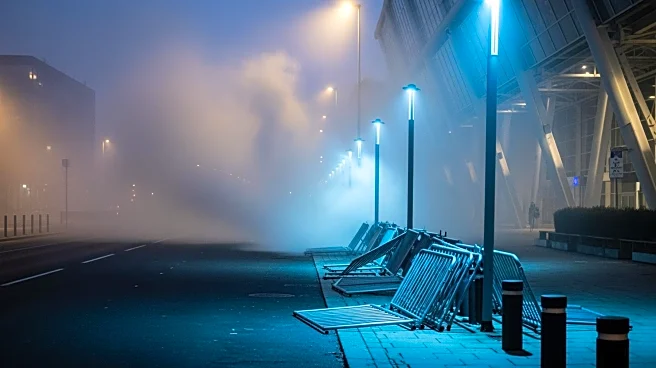
In Milan, police used tear gas and water cannons to disperse protesters near a Winter Olympics venue. The demonstration, which was initially peaceful, opposed the environmental impact of the Games and the presence
of U.S. agents in Italy. The protest took place near the Santagiulia Olympic ice hockey rink and resulted in several arrests. The protests are part of a broader movement against the Milano-Cortina 2026 Winter Olympics, with demonstrators criticizing the economic and social impacts of the event. The presence of U.S. Immigration and Customs Enforcement (ICE) agents has also been a point of contention.
Why It's Important?
The protests in Milan highlight the ongoing tensions surrounding the hosting of the Winter Olympics, particularly regarding environmental and economic concerns. The involvement of ICE agents has added a layer of controversy, reflecting broader issues related to immigration and international cooperation. The use of force by police to disperse protesters underscores the challenges faced by host cities in managing public dissent during large-scale international events. These developments could influence future decisions on hosting such events, as cities weigh the potential for public unrest against the economic and cultural benefits.
What's Next?
As the Winter Olympics continue, authorities in Milan are likely to maintain heightened security measures to prevent further clashes. The protests may prompt discussions among Olympic organizers and local governments about the role of international security forces in such events. Additionally, the Italian government may face increased pressure to address the environmental and economic concerns raised by the protesters. The outcome of these discussions could impact future Olympic Games and other international events, potentially leading to changes in how they are organized and secured.