
What's Happening?
Researchers at Scripps Research have uncovered a novel function of droplet-like structures known as condensates within cells. Traditionally recognized for their role in compartmentalizing cellular functions,
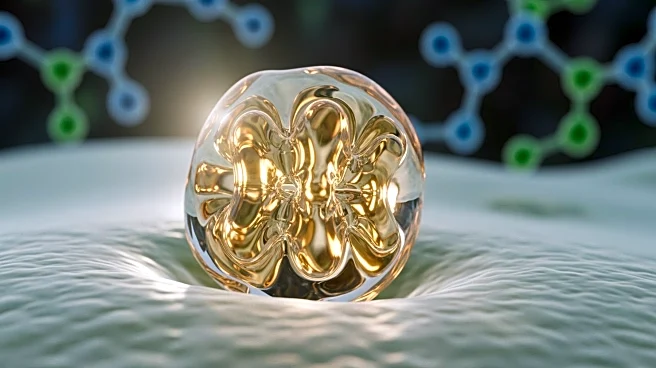
condensates have now been identified as potential regulators of bioelectricity. The study, published in the journal Small, reveals that these structures can act as biological batteries, altering the electrical charge of cell membranes upon contact. This discovery was made using cell models called Giant Unilamellar Vesicles (GUVs), which demonstrated changes in membrane voltage when interacting with condensates. The research suggests that the electrical properties of condensates could significantly influence cellular processes, particularly those involving ion channels and membrane proteins.
Why It's Important?
The findings from this study could have profound implications for understanding cellular processes and developing new therapeutic strategies. By demonstrating that condensates can induce local changes in cell membrane voltage, the research opens up new avenues for exploring how electrical signals are regulated within cells. This could impact the study of nerve impulses and other bioelectric phenomena, potentially leading to advancements in treating diseases related to electrical dysregulation in cells. The ability to manipulate these electrical properties could also pave the way for innovative approaches in bioengineering and medicine.
What's Next?
Future research will focus on elucidating the precise mechanisms by which condensates influence electrical changes in cell membranes. Scientists aim to determine the functional significance of these findings for cellular and organismal biology. If the electrical properties of condensates are found to have substantial biological effects, it could lead to the development of new therapeutic interventions targeting these structures. Further studies will also explore the potential for engineering condensates to modulate cellular functions in a controlled manner.
Beyond the Headlines
This discovery challenges the traditional understanding of cell membrane voltage as a large-scale property, highlighting the importance of local electrical changes. The study suggests that condensates could play a critical role in the regulation of ion channels and other voltage-sensitive proteins, which are essential for numerous physiological processes. This new perspective on bioelectricity could lead to a reevaluation of how electrical signals are integrated and processed within cells, with potential implications for neuroscience, cardiology, and other fields.