



What's Happening?
A delegation of Uzbek farmers, led by Tulkin Sattarov, Deputy Chairman of the Farmers’ Council and Executive Director of the Farmers Support Fund of Uzbekistan, visited China to learn about advanced agricultural practices. The visit included a training
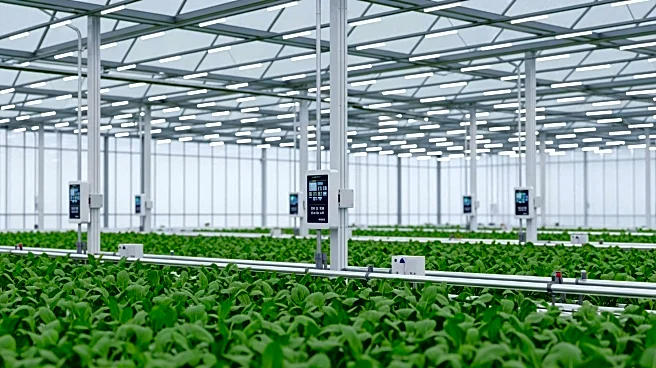
seminar at the Embassy of Uzbekistan in China, where experts from the Chinese Academy of Agricultural Sciences and the Beijing Academy of Agriculture and Forestry Sciences shared insights on modern agrotechnologies, high-yield crop varieties, and efficient resource management. The delegation also attended an international agricultural conference in Beijing, focusing on expanding trade and introducing modern agrotechnologies. Additionally, the farmers explored high-efficiency machinery and modern cultivation technologies in Tai'an, emphasizing resource-saving production methods and digitalization.
Why It's Important?
This initiative is significant as it aims to enhance Uzbekistan's agricultural sector by adopting best practices from China, a leader in agricultural innovation. By learning about high-yield crop varieties and efficient resource management, Uzbek farmers can potentially increase productivity and sustainability in cotton and grain farming. The focus on expanding international trade and economic cooperation could boost Uzbekistan's export potential, contributing to economic growth. The collaboration also underscores the importance of international partnerships in addressing global agricultural challenges and promoting sustainable practices.
What's Next?
Following the visit, Uzbek farmers are expected to implement the learned practices to improve local agricultural productivity. The exchange of knowledge may lead to further collaborations between Uzbekistan and China in agricultural research and development. The emphasis on expanding trade and economic cooperation suggests potential future agreements to enhance Uzbekistan's presence in international markets. Stakeholders, including government bodies and agricultural organizations, may monitor the outcomes of these initiatives to assess their impact on the country's agricultural sector.