





What's Happening?
Biodiversity loss is emerging as a critical global risk, with profound economic and geopolitical implications. According to reports, at least half of the global GDP, approximately $44 trillion, is moderately to highly dependent on nature. The decline
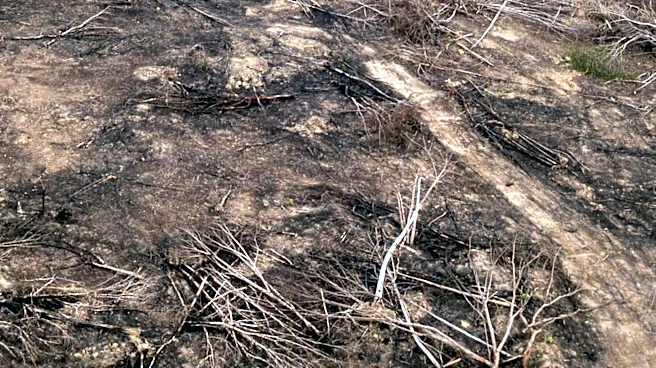
in biodiversity, driven by factors such as land-use changes, overexploitation, climate change, pollution, and invasive species, is occurring at an alarming rate, with about 1 million animal and plant species threatened with extinction. This crisis leads to food insecurity and inflation due to soil degradation, water scarcity, and pollinator loss, which can be exacerbated by short-term shocks like extreme weather. Financial markets are under-pricing nature-related risks on sovereign debt, potentially raising annual interest payments on government debt by $162 billion in the event of a partial ecosystem collapse. The United Nations Development Programme emphasizes that biodiversity loss, climate crisis, and land degradation are interconnected and require integrated solutions.
Why It's Important?
The escalating biodiversity crisis presents substantial risks to the U.S. economy and national security. Disruptions in global food systems due to biodiversity loss can lead to increased food prices and supply chain vulnerabilities, directly affecting U.S. consumers and agricultural industries. The under-pricing of nature-related risks in financial markets could trigger global economic instability, impacting U.S. investments and financial institutions. Furthermore, the potential for geopolitical instability, conflict, and increased competition for resources, as warned by the UK's Department of Environment, Food and Rural Affairs, could challenge U.S. foreign policy and security interests. The interconnectedness of biodiversity loss with climate change and land degradation means that addressing this crisis is integral to broader U.S. efforts in climate action and sustainable development, requiring significant investment and international cooperation.
What's Next?
Addressing biodiversity risk will require a significant increase in global investment in nature protection and restoration. The Kunming-Montreal Global Biodiversity Framework, with its 23 targets for 2030, provides a roadmap, though current progress indicates the world is off track to meet these goals. Greater awareness of biodiversity risks is needed across all financial actors, including credit rating agencies, central banks, and governments. Integrated solutions that combine biodiversity protection, climate action, and land restoration, backed by substantial finance, are crucial. Countries that invest in ecosystem protection, restoration, and resilient food systems will be better positioned to adapt to these challenges. International collaborations and policy frameworks will be essential to coordinate efforts and mobilize the necessary resources to mitigate these escalating risks.
Beyond the Headlines
The biodiversity crisis highlights a fundamental re-evaluation of humanity's relationship with the natural world. Beyond economic and political calculations, there are profound ethical considerations regarding the intrinsic value of species and ecosystems. The crisis also exposes systemic failures in how economic models account for natural capital, suggesting a need for a paradigm shift towards valuing ecosystem services. The interconnectedness of biodiversity loss, climate change, and land degradation underscores the concept of planetary boundaries, where exceeding certain thresholds can lead to irreversible changes. This necessitates a deeper societal understanding and cultural shift towards sustainable living and consumption patterns, moving beyond short-term gains to ensure long-term planetary health and human well-being.